 4.9
4.9


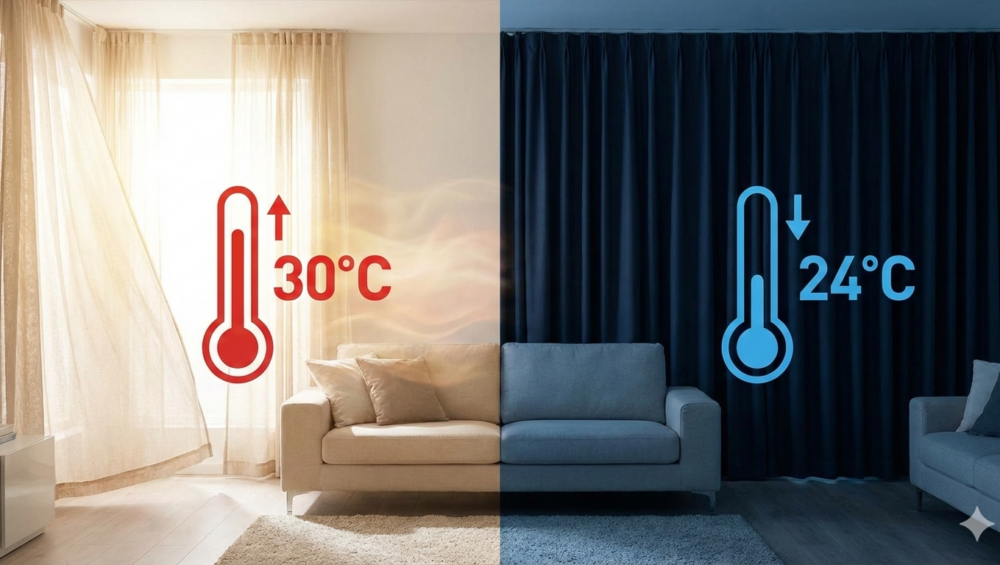
Living in a tropical metropolis like Jakarta presents a unique set of challenges. You love the vibrant energy and the endless summer, but you likely hate the side effects: the scorching midday heat and the relentless noise of traffic.
Most people misunderstand the humble blackout curtain. They think it serves one purpose: making a room dark for sleeping. In reality, viewing them only as light blockers misses the bigger picture.
Functionally, high-quality blackout drapery acts as a shield. It serves as your home’s first line of defense against the harsh environment outside. Therefore, we need to look beyond the darkness. We need to discuss physics.
Ready to lower your AC bill and find some peace? Let’s analyze the science of thermal and acoustic control.
How Blackout Curtains Regulate Heat and Sound in Tropical Homes
1. The Power of Thermal Coating
First, let’s address the heat. In a tropical home, your windows act as massive radiators. Sunlight hits the glass, passes through, and heats the air inside your bedroom. Specifically, this process drives up the temperature and forces your air conditioner to work overtime.
Regular thin curtains do almost nothing to stop this thermal exchange. They might shade the room, but they still absorb and radiate heat.
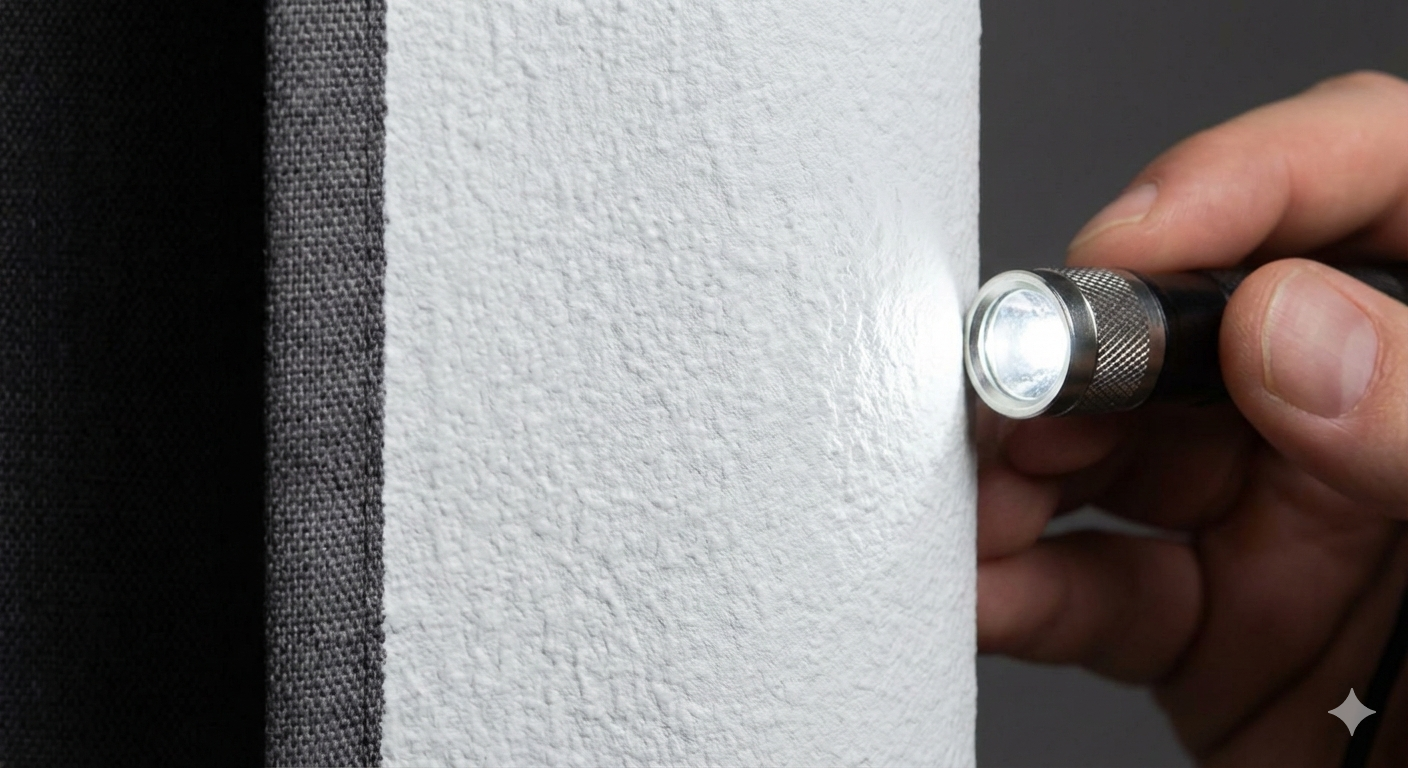
In contrast, true blackout curtains employ a secret weapon: Thermal Coating.
Manufacturers apply multiple layers of acrylic foam or white backing to the reverse side of the fabric. Why does this matter? This light-colored backing does not just block light; it actively reflects UV rays. Instead of absorbing the sun’s energy, the curtain bounces it back out the window. Consequently, the heat never actually enters your living space.
2. The “Air Pocket” Insulator
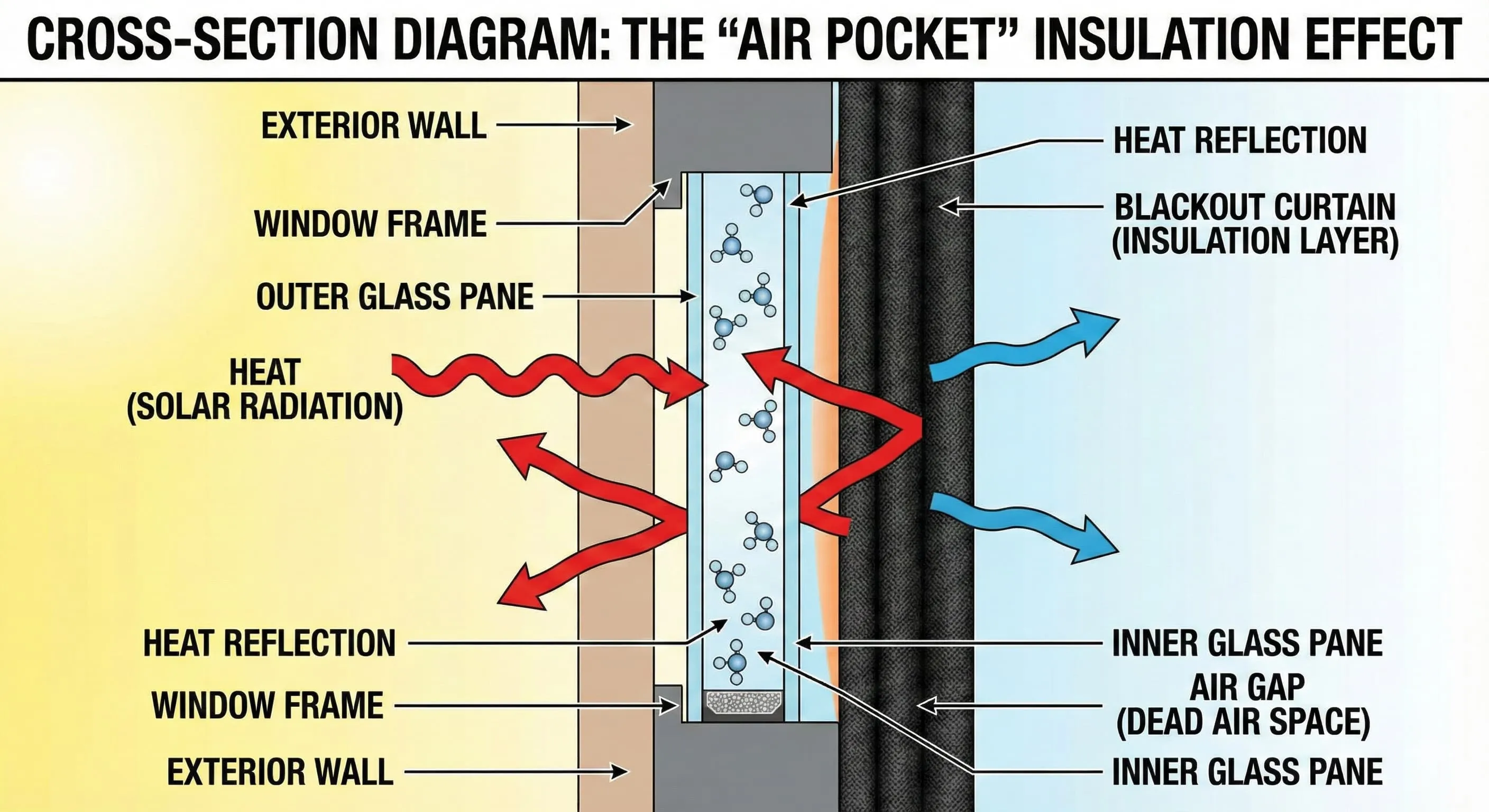
However, buying the right curtain solves only half the problem. You must install it correctly to unlock its full potential.
Experienced interior designers know that the curtain itself is not the only insulator. The air is the insulator. By hanging your curtains properly, you create a “dead air space” between the fabric and the glass window pane.
Here is the trick: You must ensure the curtains reach all the way to the floor and seal effectively at the sides. If you leave large gaps, the air circulates. But, if you trap that layer of air, it acts as a thermal buffer. It prevents the hot air from the window from mixing with the cool air in your room. Ultimately, this technique is the most cost-effective method for insulating your room against the Jakarta humidity.
3. Reducing Acoustic Resonance
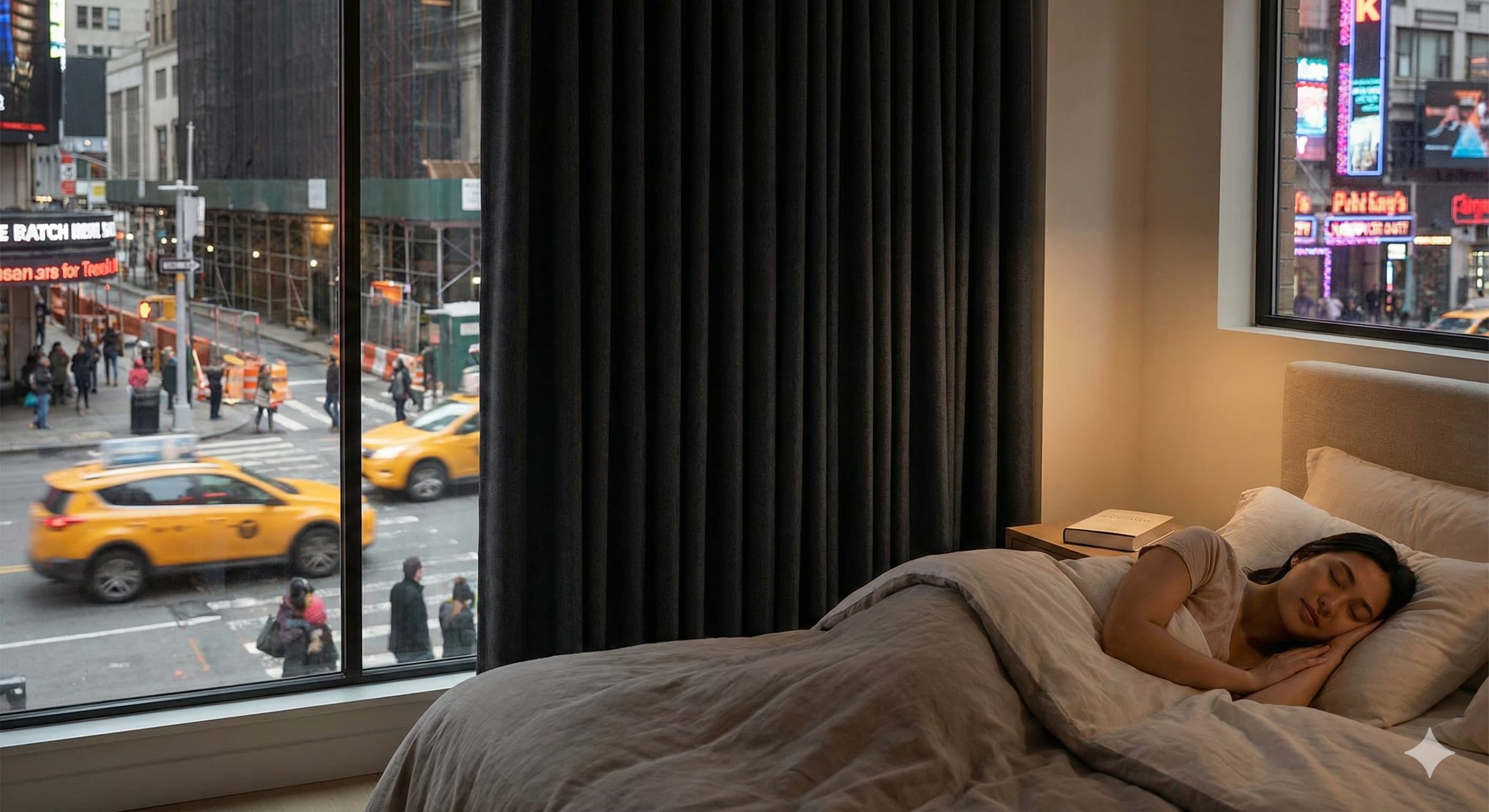
Now, let’s talk about noise. Whether it is the 5 AM prayer, the motorcycles on the main road, or the construction next door, sound waves constantly bombard tropical homes.
Sound travels as a vibration. When these waves hit a thin surface (like glass or sheer fabric), the surface vibrates and passes the noise right through. We call this acoustic resonance.
Fortunately, blackout curtains fight this with density.
Heavy, multi-layered blackout fabrics possess mass. When sound waves hit this dense barrier, the fabric absorbs the energy rather than vibrating with it. While they won’t soundproof your room like a recording studio, they significantly dampen high-frequency noises. As a result, that sharp motorcycle exhaust sounds like a dull, distant hum.
Conclusion: An Investment in Wellness
Stop thinking of curtains as just decoration. In a tropical climate, they perform a vital function. They protect your furniture from sun damage, they keep your electricity bills lower, and they protect your sleep from the noisy city.
Therefore, next time you shop for window treatments, flip the fabric over. Check the coating. Feel the weight. Choose a curtain that works as hard as you do.








2 Comments
Hello,
* In Puerto Rico it is accepted and normal for people to remove the mufflers altogether, and put holes in the pipes to make it even louder.
Can you recommend two (2) types of curtains to help motivate this?
Thank you, JL
P.S. It’s the one issue that makes me want to move
Correction: Mitigate this problem. The best curtains to mitigate.