 4.9
4.9


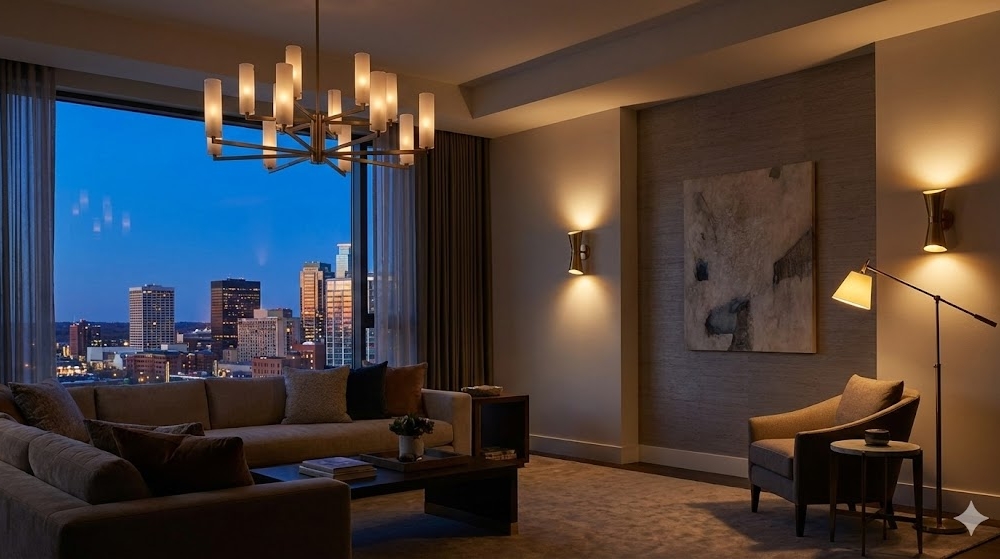
Imagine walking into a five-star hotel lobby. You immediately feel the warmth, the depth, and that unmistakable “expensive” vibe. However, you likely cannot point to a single source of light. In contrast, many homeowners make the mistake of installing one massive LED panel in the center of the room and calling it a day.
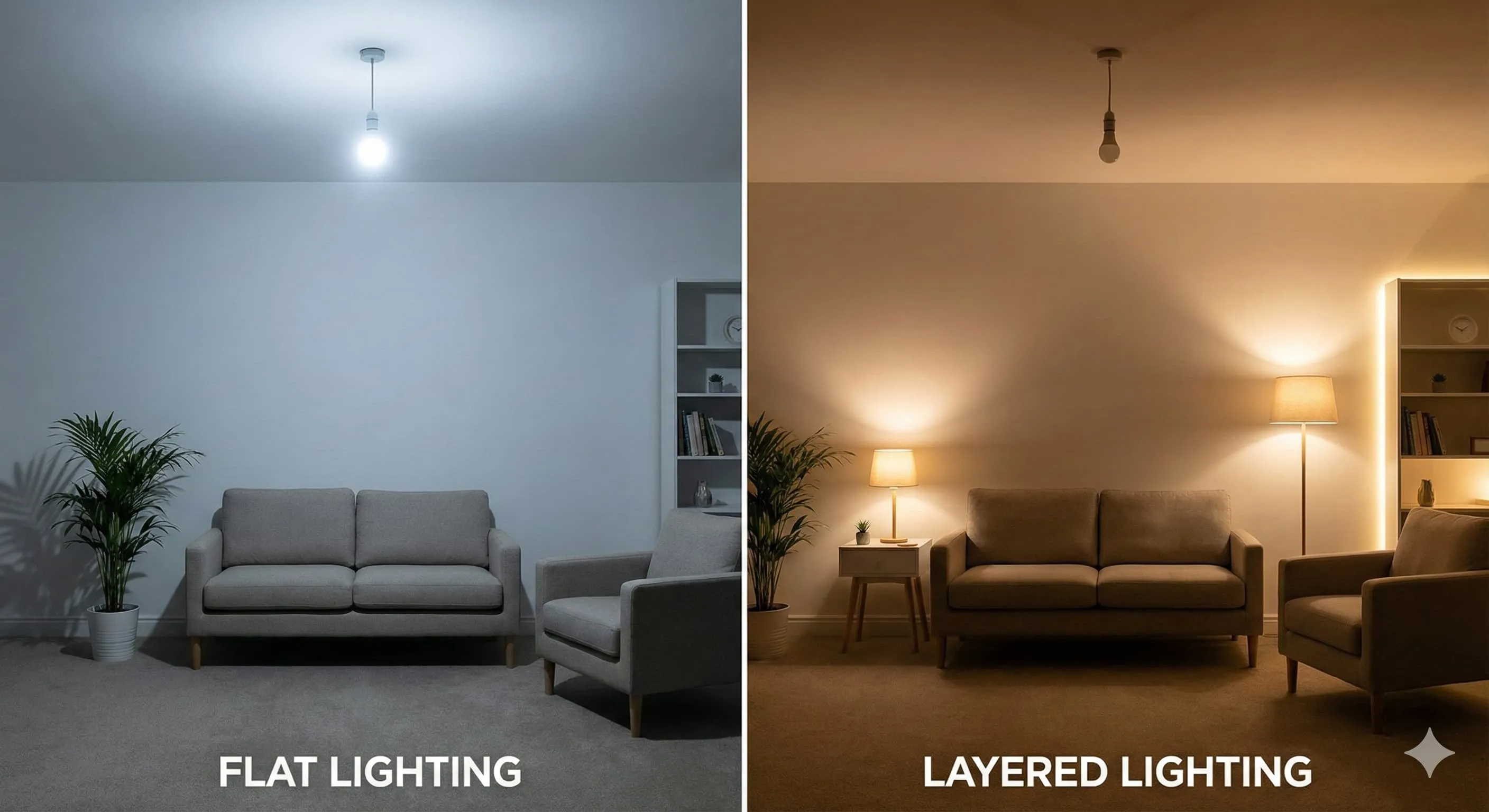
We call this “Flat Lighting,” and it is the ultimate mood killer. Specifically, a single light source creates harsh shadows, flattens your furniture’s texture, and makes your sanctuary feel like a clinical laboratory.
To achieve a professional, luxurious look, you must master Vertical Layering. Essentially, you treat light like a landscape, building it from the ceiling down to eye level. Therefore, we created this guide to help you combine chandeliers, pendants, and sconces like a pro.
Ready to kill the shadows? Let’s break down the three essential layers.
Combining Chandeliers, Pendants & Sconces
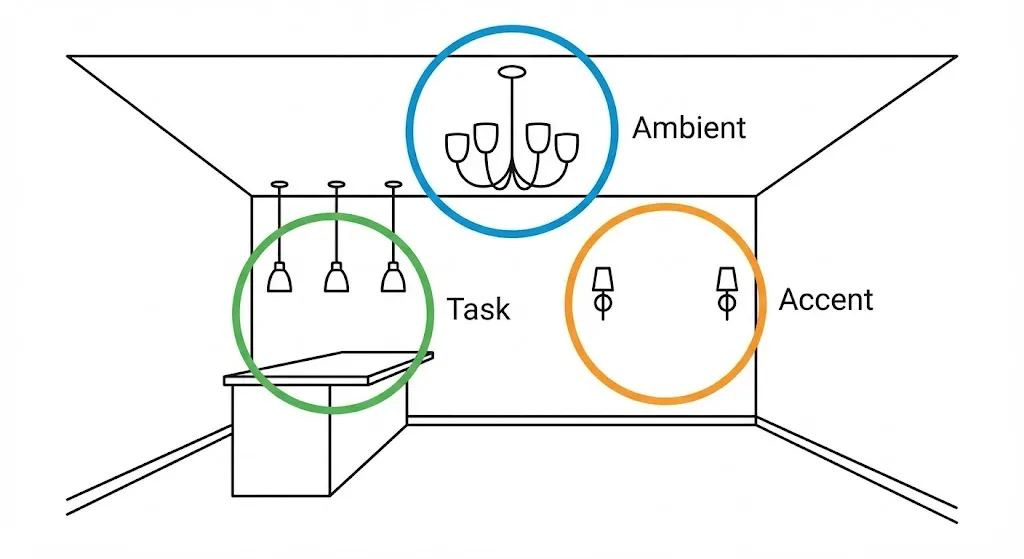
1. Ambient Lighting: The Foundation
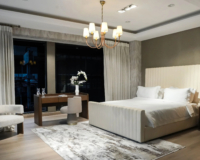
Think of Ambient Lighting as the base coat of paint on a canvas. Its primary job involves replacing natural sunlight once the sun sets. Usually, this layer comes from your chandelier or large ceiling fixtures.
Basically, ambient light provides a uniform level of illumination so you can navigate the room safely. However, a common pitfall involves making this layer too bright. Instead, you want a soft, diffused glow. By using a chandelier with a fabric shade or frosted glass, you spread the light evenly. Consequently, you establish a comfortable “baseline” without blinding your guests.
2. Task Lighting: The Functional Focus
Once you have your base, you must add Task Lighting. Unlike ambient light, which covers everything, task lighting focuses on a specific zone for a specific activity.
For example, you place pendant lights directly over a kitchen island or a study desk. Because these fixtures hang lower, they deliver a concentrated beam exactly where you need it. Specifically, they help you chop vegetables safely or read a book without straining your eyes. Furthermore, pendants serve as great visual anchors, defining functional areas within an open-plan living space.
3. Accent Lighting: The Visual Jewelry
Finally, we have the most ignored but most important layer: Accent Lighting. This layer adds drama, depth, and personality. Typically, we use wall sconces or directional spotlights for this purpose.
Essentially, accent light draws the eye to a Visual Hierarchy. You use it to highlight a piece of art, a textured brick wall, or a beautiful bookshelf. By creating “pockets” of light and shadow, you add three-dimensional volume to the room. Without this layer, your home loses its architectural soul. Thus, always install sconces to frame a fireplace or a large mirror to create that curated, high-end look.
Pro Tip: How to Mix Fixtures Without the Mess
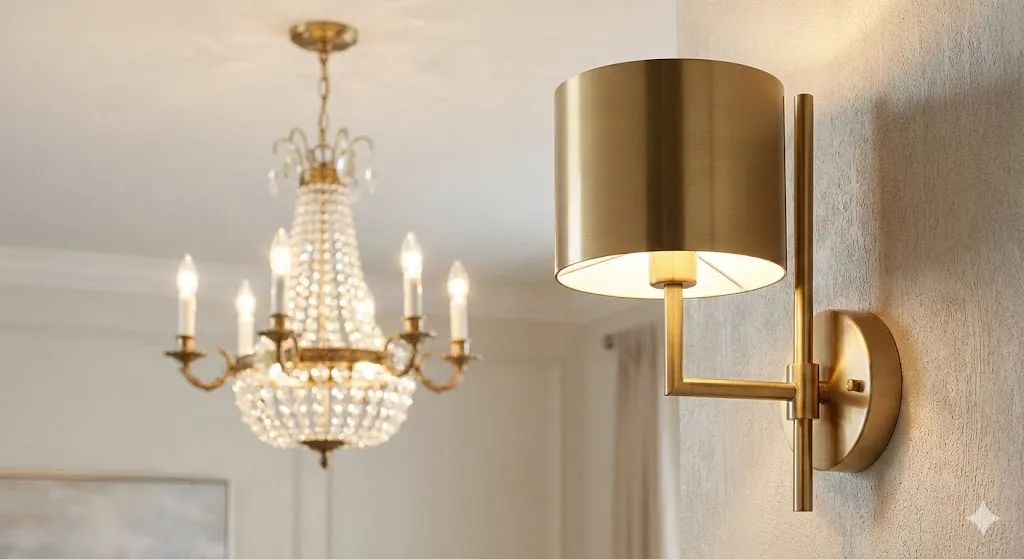
A common fear involves clashing styles. You might wonder if a crystal chandelier can coexist with modern wall sconces. The answer is a resounding yes.
To keep the design language cohesive, follow these rules:
-
Match the Metals: If your chandelier features a brushed brass finish, ensure your sconces share that same metal tone. This creates a “thread” that ties the room together.
-
Balance the Scale: Typically, the chandelier acts as the dominant focal point. Therefore, your sconces and pendants should play a supporting role. Choose simpler designs for your secondary lights so they do not compete for attention.
-
Use Dimmers Everywhere: This is non-negotiable. By installing dimmers, you gain total control over the intensity of each layer. You can dim the ambient chandelier for a romantic dinner while keeping the accent sconces bright to highlight your favorite painting.
Conclusion: Avoid the “Flat” Trap
Lighting defines how you experience your home. Ultimately, relying on a single light source limits your home’s potential. By layering ambient, task, and accent sources, you create a dynamic environment that adapts to your needs.
So, stop settling for “bright enough.” Start designing with intention. Your furniture, your art, and your mood will thank you.