 4.9
4.9


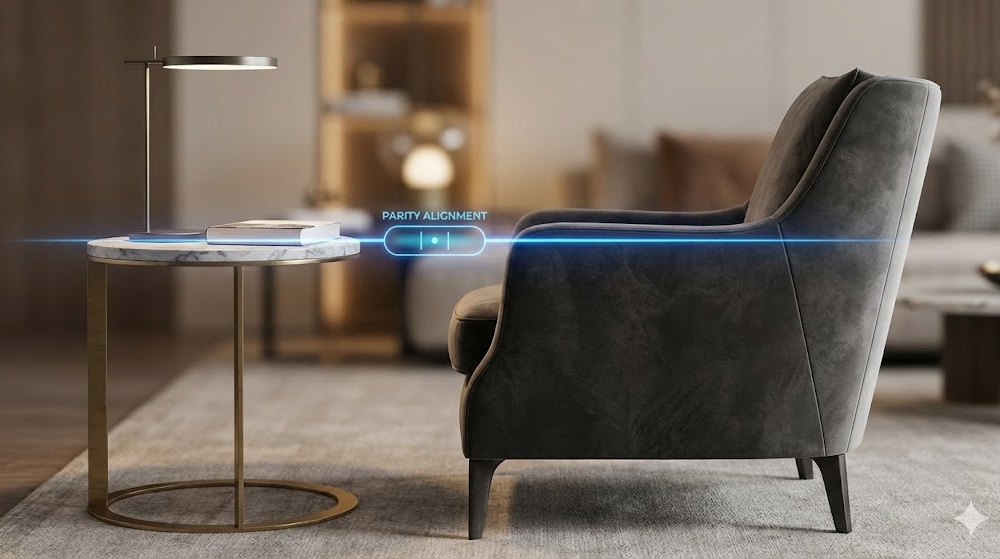
Most people ignore the side table until it fails them. Actually, you only notice a side table when you have to reach too far down for your coffee or when you accidentally knock over a lamp because the surface sits too high. Consequently, choosing the right height involves more than just matching a style; it requires an understanding of ergonomic geometry.
A side table acts as the functional companion to your seating. Therefore, if the proportions clash, you break the “flow” of your living room. Fortunately, you can solve this with a simple set of rules. We call this the “Armrest Rule.”
Ready to stop the awkward reaching? Let’s break down the technical math of side table placement.
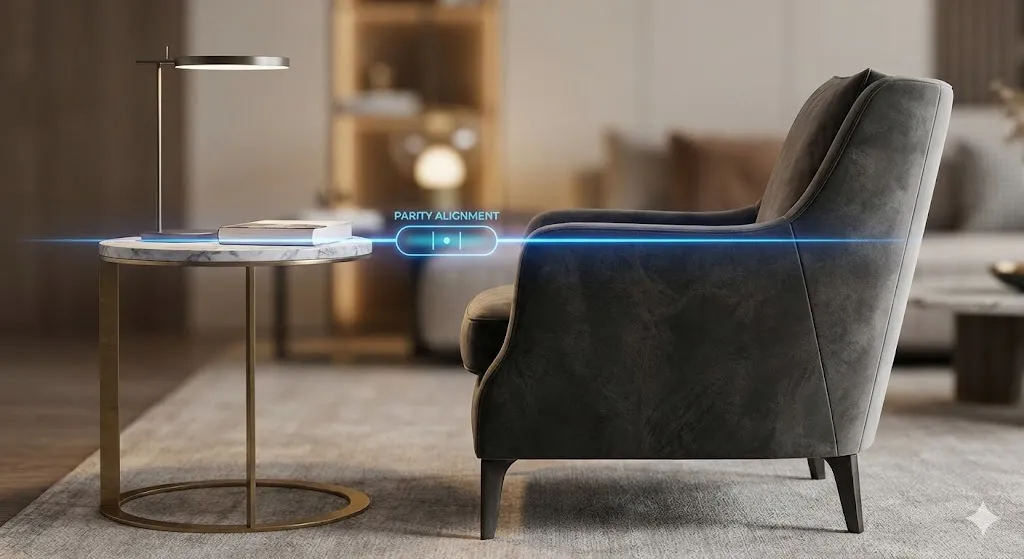
1. The Core Principle: Parity is King
Primarily, you must aim for a height that aligns with the arm of your sofa or chair. Specifically, the surface of the side table should sit flush with, or slightly below, the armrest.
Why does this matter? When you sit, your elbow naturally rests at a specific level. Accordingly, you want to move your hand horizontally to set down a glass or pick up a remote. If the table sits higher than the armrest, you create a visual barrier and a physical obstacle. Conversely, a table that sits at the same height creates a seamless transition that feels intuitive to the human body. Thus, parity remains the gold standard for luxury interiors.
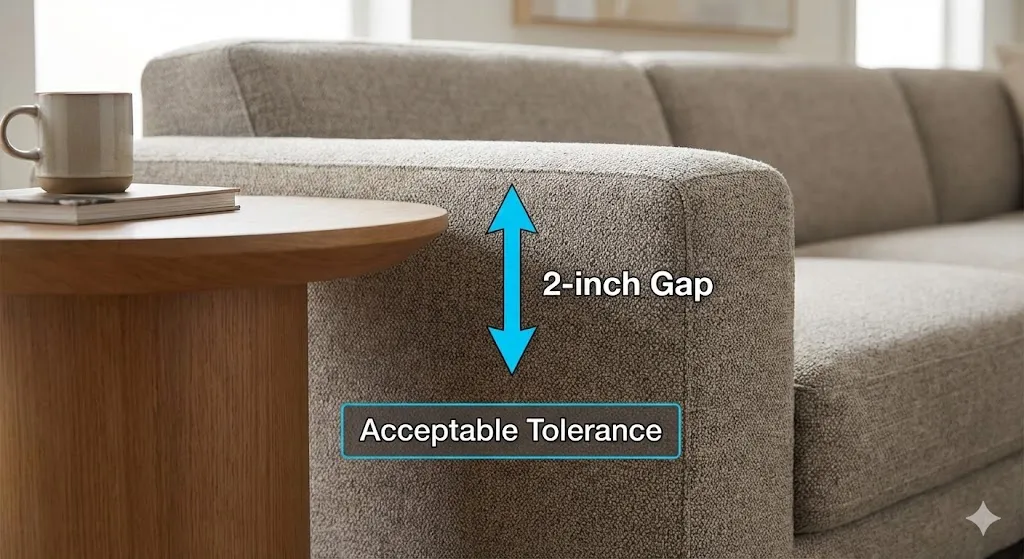
2. The 2-Inch Tolerance Rule
However, finding a table that perfectly matches your sofa’s armrest height to the millimeter is often impossible. In reality, you have a small window of ergonomic tolerance.
To begin with, you should measure from the floor to the very top of your sofa’s armrest. Next, apply the 2-inch rule:
-
The Ideal: 0 inches (Perfect parity).
-
The Tolerance: Maximum 2 inches below the armrest.
Specifically, never choose a table that stands taller than the armrest. As a result of a taller table, the room feels cluttered and “boxy.” Furthermore, a table sitting more than 2 inches below the armrest forces you to lean your torso sideways just to reach your items. Consequently, sticking to this tight 2-inch window ensures you maintain both comfort and visual balance.
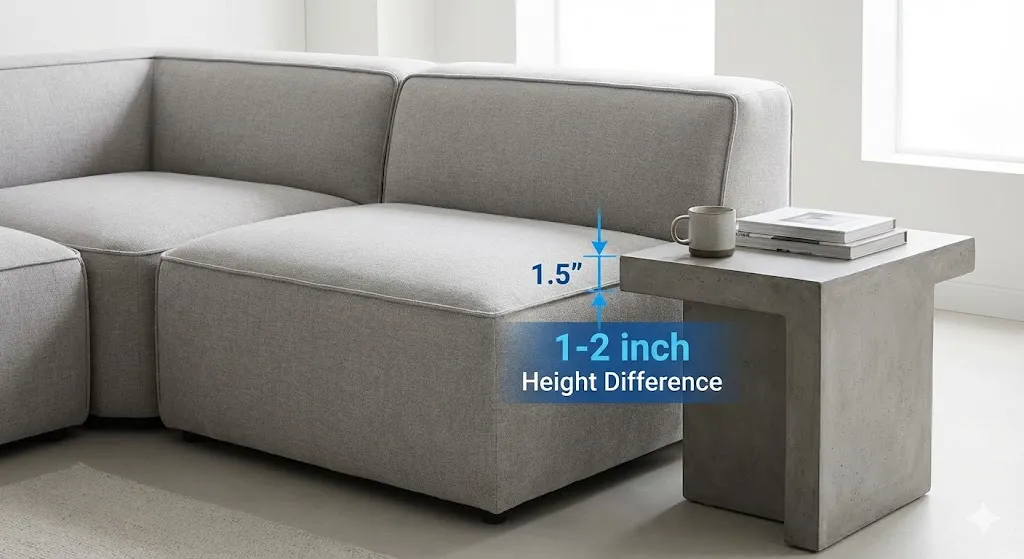
3. The Armless Sofa Challenge: A Different Strategy
On the other hand, what happens if you own a modern armless sofa or a sleek chaise lounge? Without an armrest to act as a guide, most people feel lost.
Primarily, you must pivot your reference point to the seat cushion. Ideally, for armless furniture, you should choose a table that sits 1 to 2 inches higher than the seat itself.
Because you lack a side barrier, your hand naturally drops slightly lower when reaching out. By placing the table just an inch or two above the cushion, you provide a clear “landing zone” for your belongings. Simultaneously, this height prevents the table from disappearing visually behind the sofa’s profile. Therefore, this slight elevation maintains the spatial dynamics of the room while keeping your coffee within easy reach.
Conclusion: Function Dictates Form
Interior design looks like art, but it functions like a science. Ultimately, the “Armrest Rule” removes the guesswork from your shopping experience. By measuring your sofa before you browse, you ensure your new purchase supports your lifestyle rather than hindering it.
So, grab your tape measure. Your perfect ergonomic setup starts with a single measurement.