English
 Bahasa Indonesia

We have all experienced it. You visit a showroom, sit on a plush cloud-like sofa, and fall in love. You buy it immediately. However, fast forward twelve months, and that same sofa feels like a hammock. You sink right to the hard frame, and your back aches.
Why does this happen? Basically, you fell victim to low-quality foam.
Most shoppers judge a sofa by its cover. Yet, smart buyers know that the real magic happens inside. Understanding the engineering behind cushion construction distinguishes a wise investment from a future regret. Specifically, we need to talk about foam density, firmness, and the physics of comfort.
Ready to geek out on comfort science? Let’s dive in.
Density vs. Firmness
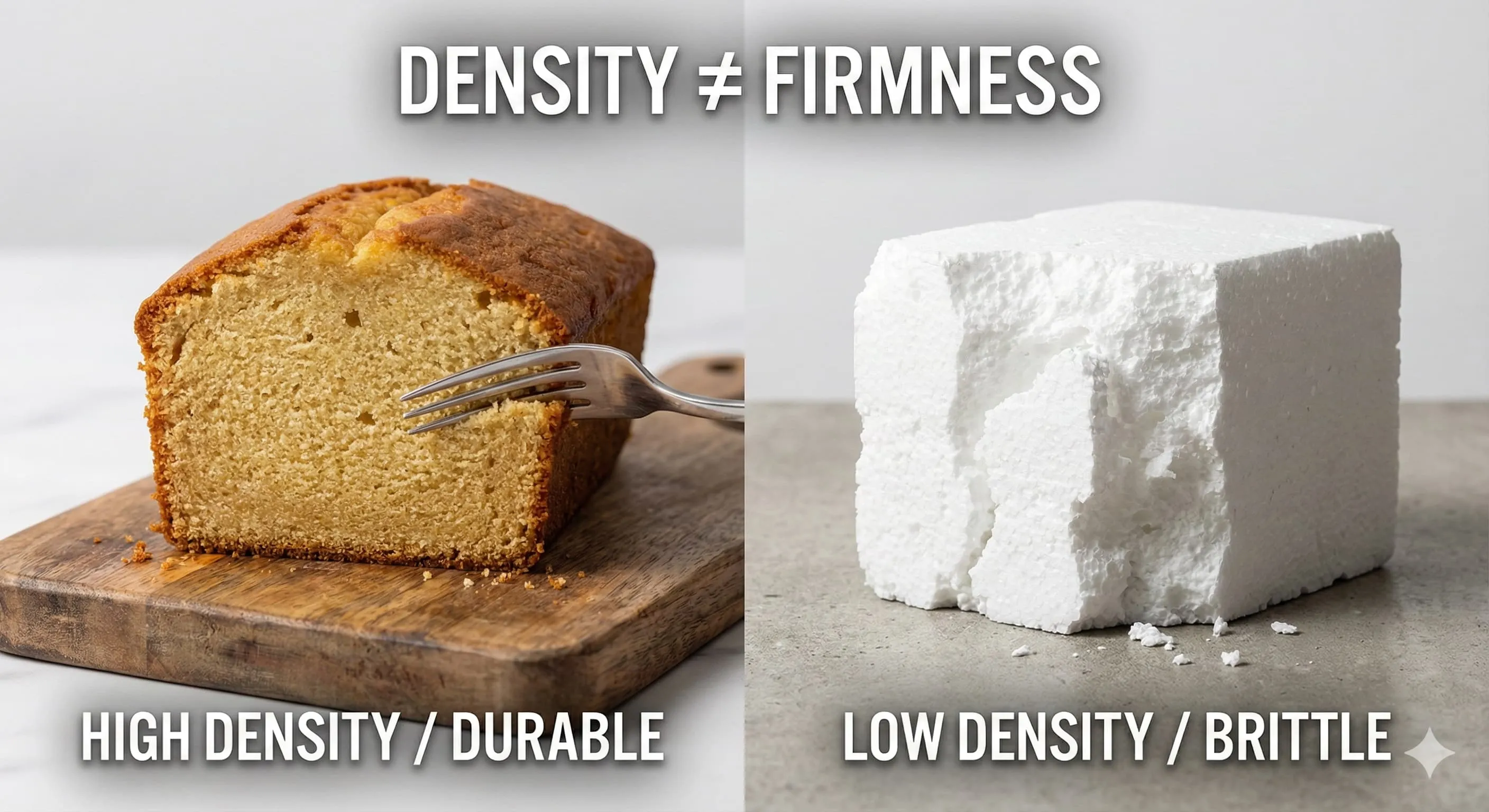
First, we must clear up a massive myth. Most people think “High Density” means “Hard.” In reality, this is completely false.
-
Density refers to weight. It measures how much material exists in a cubic foot of foam. Therefore, it dictates durability.
-
Firmness refers to feel. It measures how much force it takes to compress the foam. Consequently, it dictates comfort.
You can have a high-density foam that feels super soft (like a heavy pound cake). Conversely, you can have a low-density foam that feels rock hard (like a dry Styrofoam block).
Ultimately, you want high density. A high-density rating (usually above 2.0 lbs) means the manufacturer packed more polymer material into the cushion and used less air. Thus, the cushion withstands years of sitting without losing its structure.
The “Bounce Back” Factor: What is Resilience?
Now that we understand weight, we must discuss “Resilience.” In the industry, we often refer to “HR Foam” or High Resilience Foam.
Think of a cheap sponge. If you squeeze it, it stays flat for a second before slowly returning to shape. On the other hand, HR foam acts like a spring. It pushes back against your weight immediately.
Why does this matter for ergonomics?
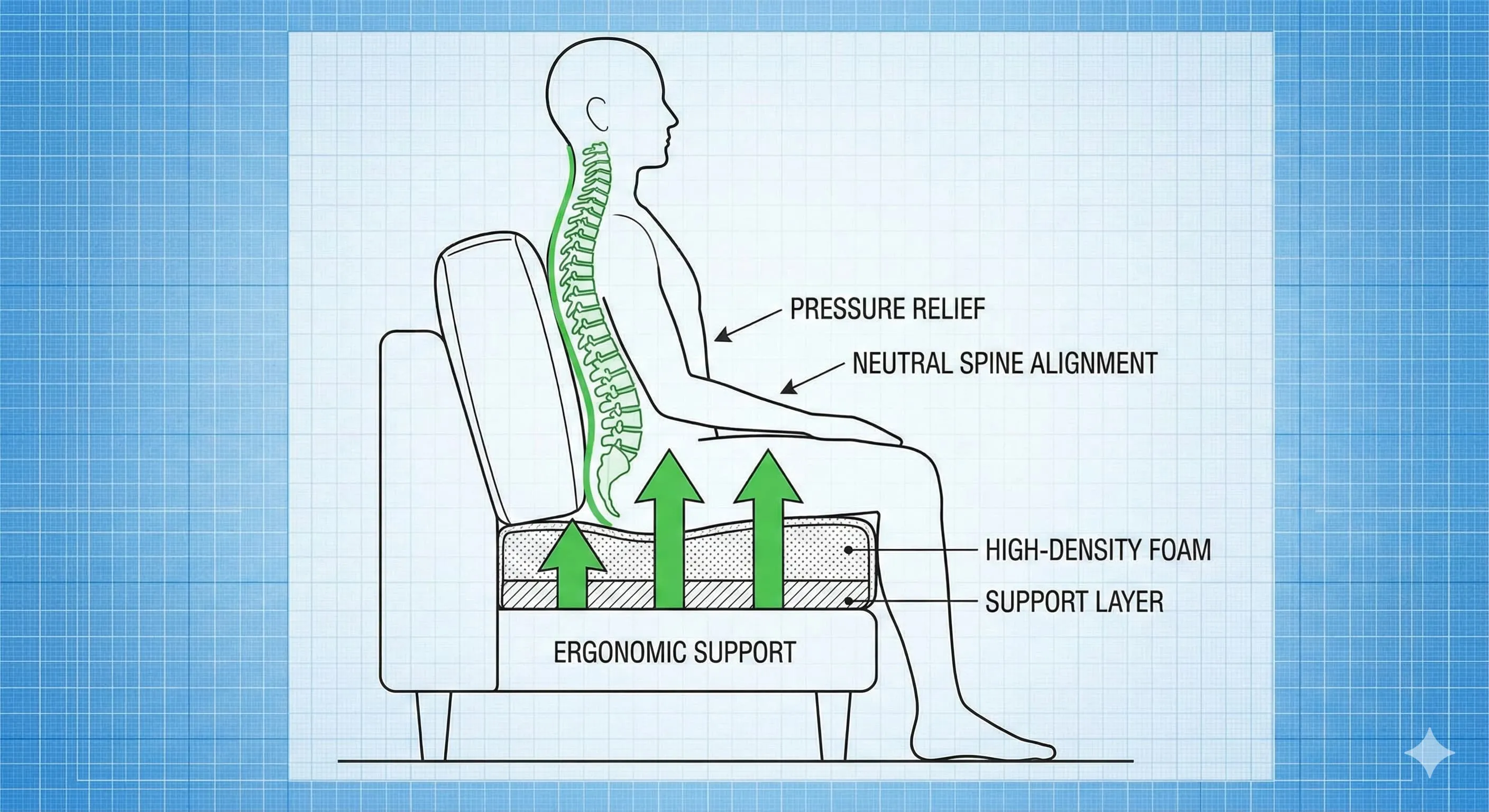
When you sit, you need the surface to contour to your body. However, you also need it to support you. High Resilience foam provides this active support. It distributes your weight tailored to your body shape, relieving pressure points on your hips and spine. Furthermore, it prevents that “stuck in quicksand” feeling.
The “Sinking” Reality: Why Cheap Sofas Fail
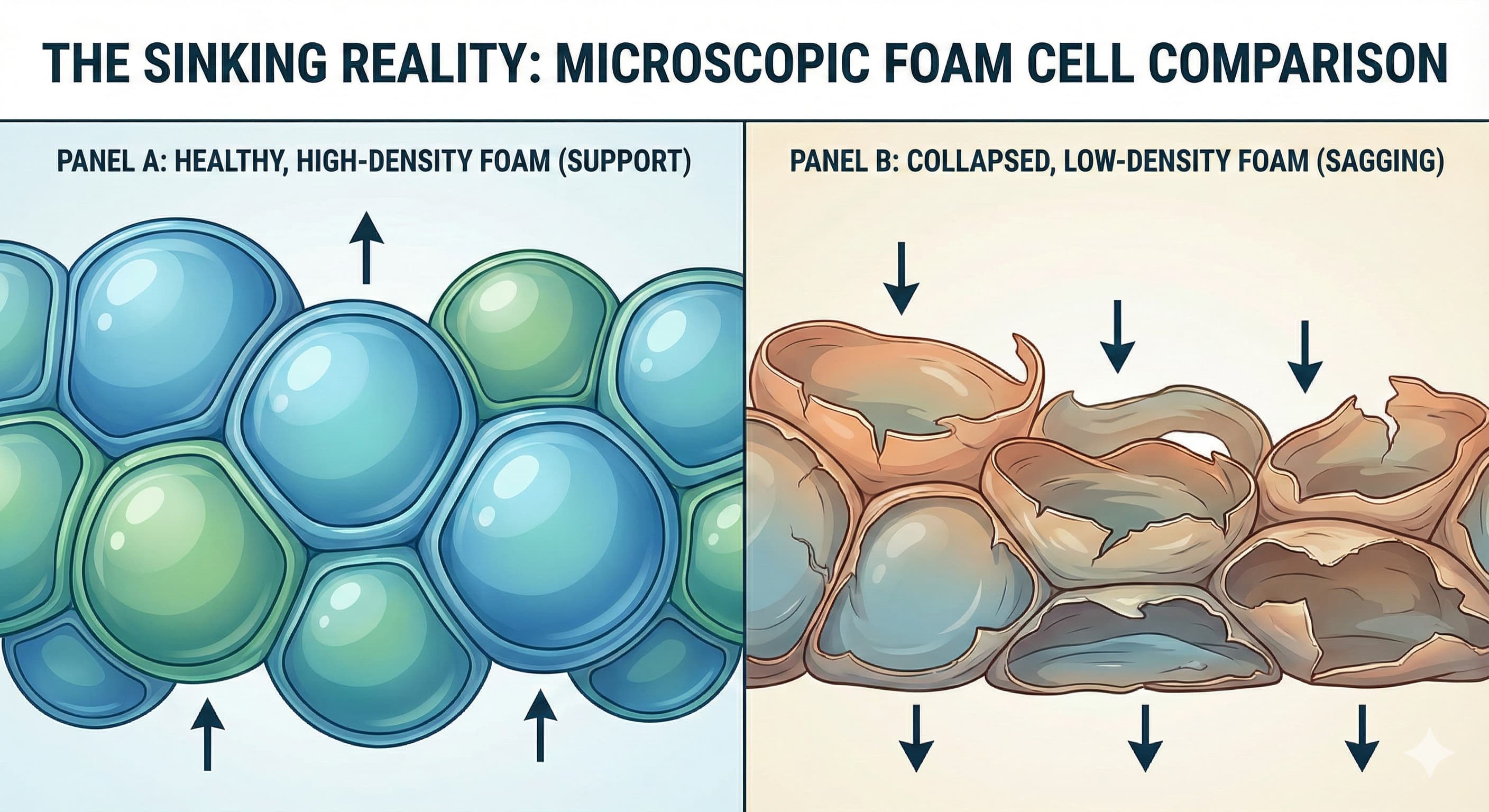
So, why did your old sofa sag after a year? Essentially, gravity won the battle against air.
Low-density foam contains millions of tiny air bubbles with very thin cell walls. Every time you sit, you crush these walls. Over time, these weak walls burst permanently. As a result, the foam loses its ability to hold air, and it flattens out. We call this “material fatigue.”
In contrast, high-density foam possesses thick, robust cell walls. They flex under pressure but do not break. Therefore, the seat retains its original height and feel for a decade or more, rather than just a season.
The Solution: The Art of Layering
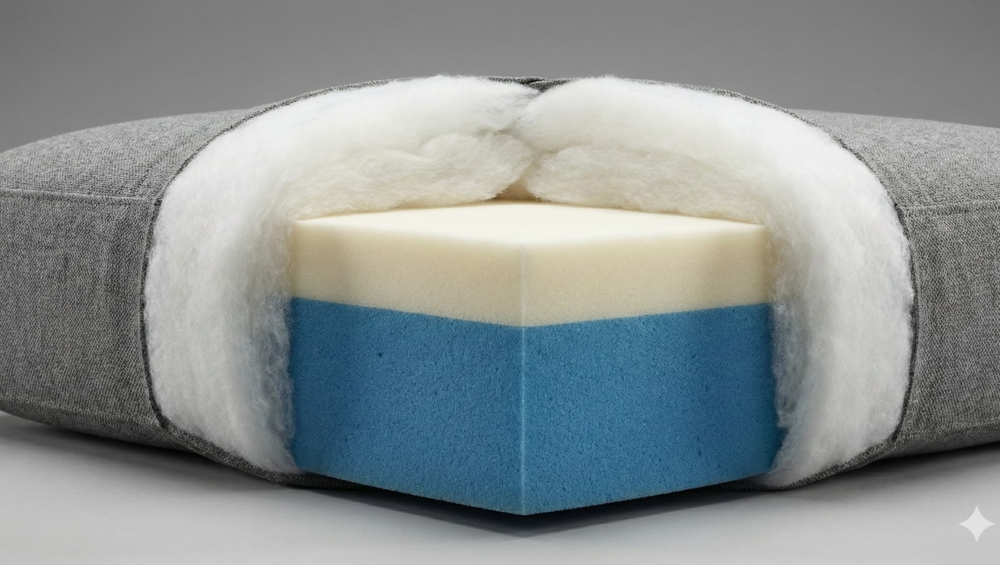
Top-tier manufacturers rarely use just one block of foam. Instead, they employ a sophisticated engineering technique. They construct the seat using high-density foam layering.
This process involves a “sandwich” approach:
-
The Core: They place a firm, high-density block at the bottom to provide a stable foundation (an ergonomic necessity for spine alignment).
-
The Crown: They bond a softer, high-resilience layer on top to provide that initial “sink-in” luxury.
-
The Wrap: Finally, they wrap the entire unit in Dacron fiber or down feathers for surface softness.
By doing this, the manufacturer gives you the best of both worlds: the soft comfort you want and the structural integrity you need.
Conclusion: Inspect Before You Invest
Don’t let a pretty fabric fool you. Next time you shop for furniture, ask the tough questions. Ask about the foam density. Ask about the layering.
Ultimately, true luxury relies on science. A sofa built with high-density, high-resilience foam supports your body properly and respects your wallet by lasting for years. You deserve comfort that stays comfortable.