 4.9
4.9


Many homeowners experience massive sticker shock when they shop for organic, rounded furniture. Actually, researching a sofa curved custom Jakarta harga reveals a significantly higher number than standard straight couches. Consequently, buyers often wonder why a simple curve drastically inflates the final bill. Instead of guessing, you must understand the underlying mechanical engineering and material science that shape these beautiful pieces.
At Home Decor Indonesia, we engineer complex spatial solutions daily. Therefore, we created this analytical listicle to break down exactly what drives a custom curved sofa Jakarta price. Specifically, we want to help you evaluate every sofa lengkung custom Jakarta harga logically before you make your final investment.
Ready to decode the manufacturing mechanics? Let’s dissect the pricing anatomy!
1. The Complex Framework Engineering
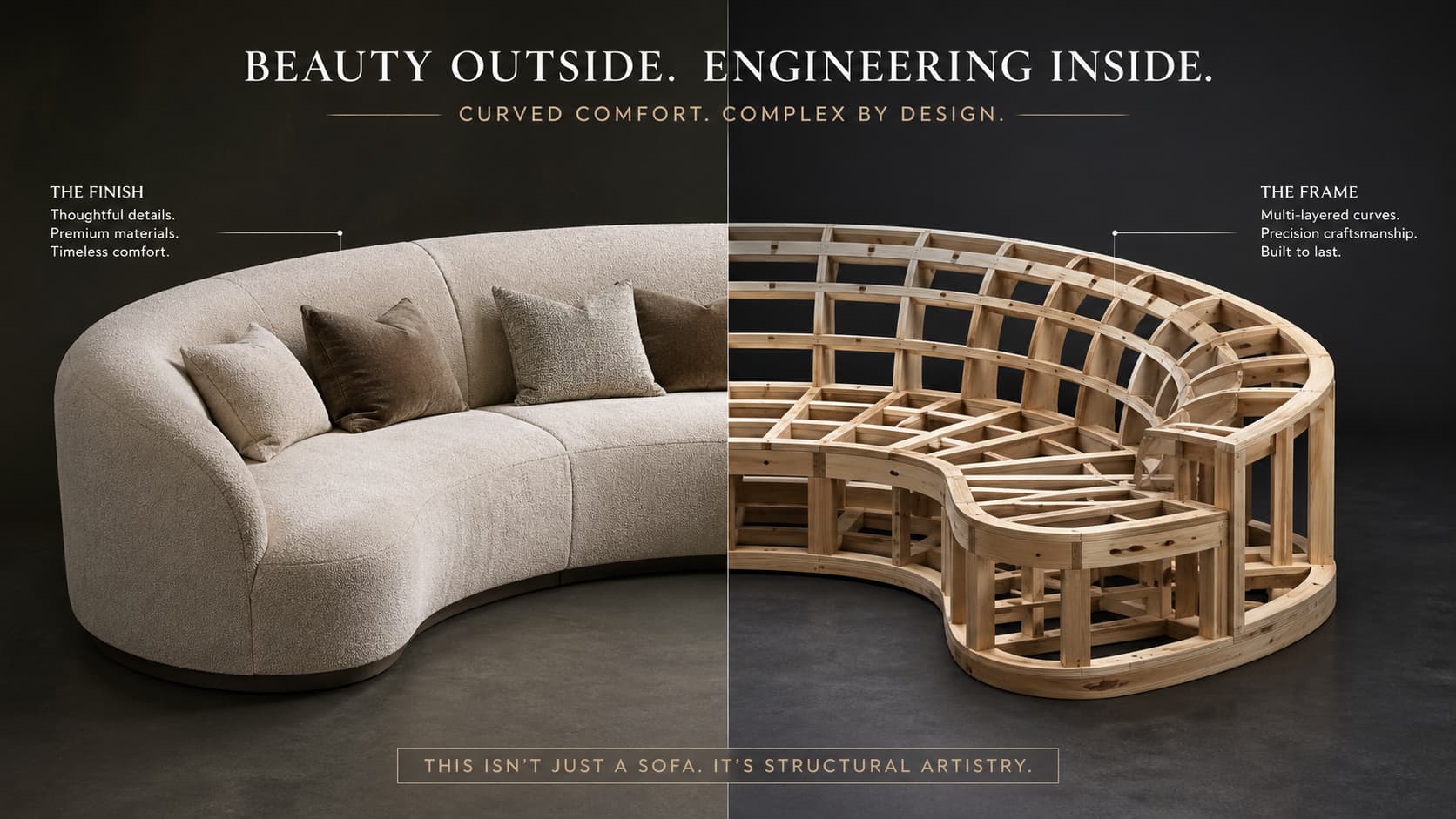
First, you must analyze the internal wooden skeleton. Usually, building a straight rectangular sofa simply requires cutting flat wooden boards. However, constructing a curved frame demands advanced structural geometry.
Because craftsmen must bend solid wood using pressurized hot steam or cut precise arcs using expensive CNC router machines, the labor hours multiply rapidly. Furthermore, this specialized bending process requires exceptional skill to prevent the wood from snapping under tension. Ultimately, you pay for this advanced structural engineering when you purchase a curved silhouette.
2. High-Density Foam Sculpting and Waste
Next, let us examine the internal cushioning mechanics. Typically, foam factories produce high-density polyurethane in massive, perfectly square blocks.
If an artisan wants to build a curved backrest, they must manually carve that square block into a smooth, organic arc. Consequently, this subtractive sculpting process creates a massive amount of unusable foam waste. Therefore, the manufacturer calculates this wasted raw material directly into your final retail price. Thus, achieving that perfect, supportive curve inherently costs more money.
3. Advanced Tailoring and Fabric Yield
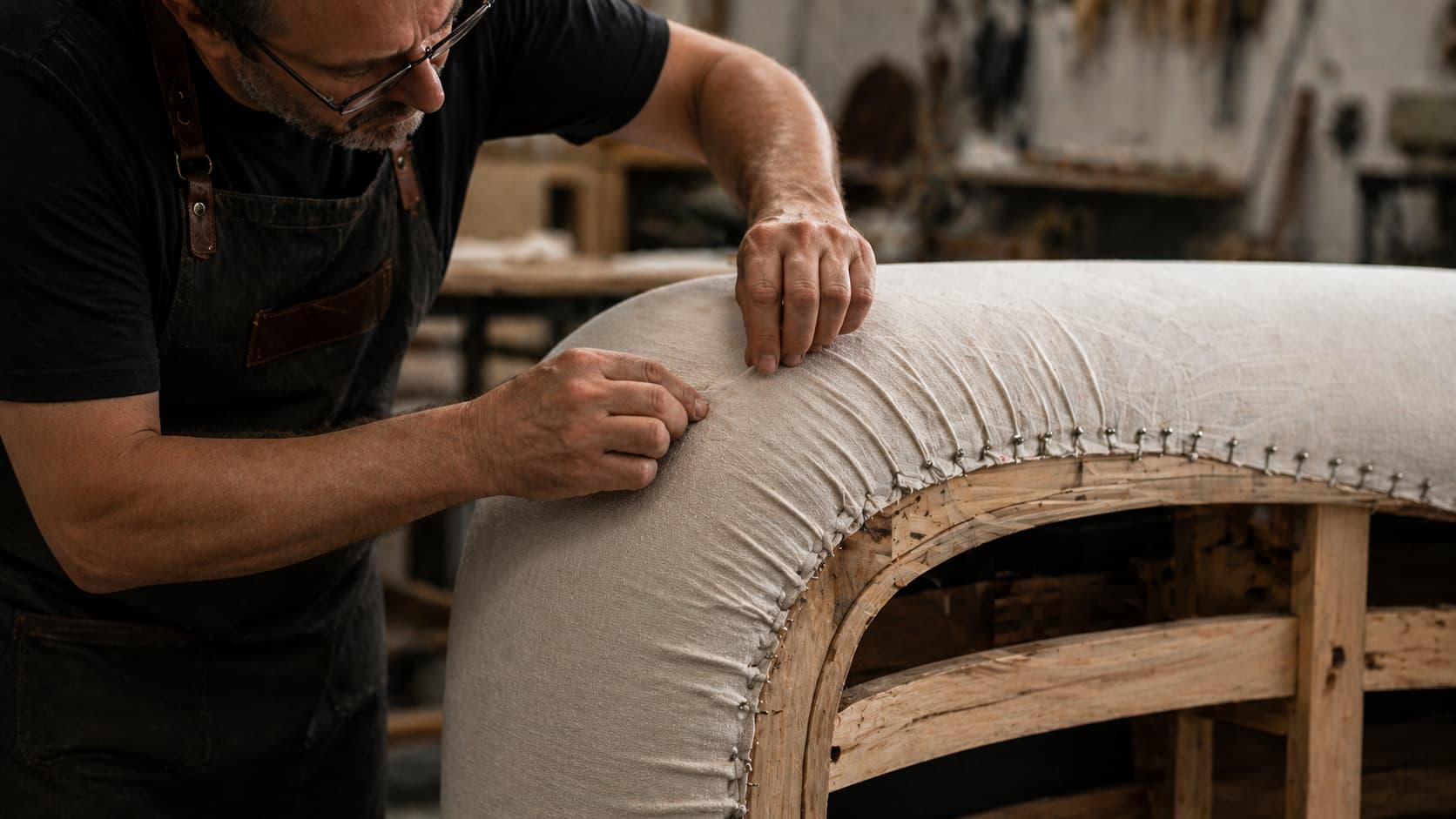
Moreover, wrapping fabric over a rounded surface introduces intense upholstery challenges. Actually, stretching stiff fabrics over a 3D curve naturally creates ugly wrinkles and folds.
To solve this, master tailors must cut the fabric into multiple small, geometric panels and stitch them together seamlessly. Because this complex pattern-matching process consumes extra meters of fabric, your material costs rise significantly. Ultimately, achieving a wrinkle-free, tight upholstery job on a curve requires elite craftsmanship that commands a premium rate.
4. Custom Spatial Dynamics
Additionally, buying a “custom” piece means you pay for personalized spatial analysis. Specifically, a curved sofa must match the exact architectural radius of your specific living room.
If the curve bends too sharply, it destroys your daily traffic flow. Therefore, professional interior consultants must calculate the perfect geometric arc for your space. By paying a premium price, you secure this vital mathematical planning. Consequently, your furniture fits your apartment’s layout flawlessly.
5. The Home Decor Indonesia Efficiency
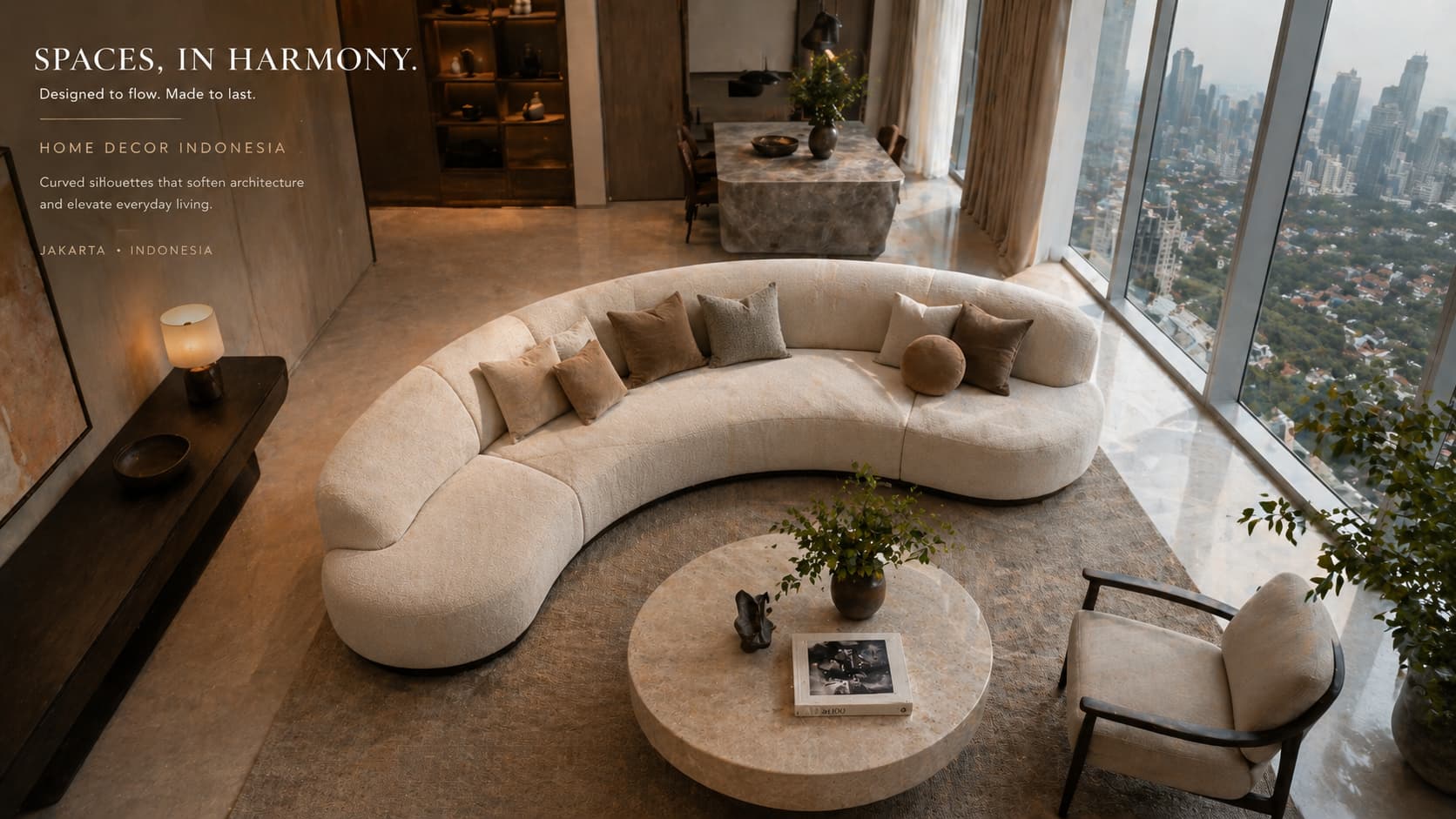
Finally, you must evaluate the overall production ecosystem. While custom curves cost more to produce, smart brands optimize their supply chains to offer better value.
Because we manage our own manufacturing lines at Home Decor Indonesia, we eliminate expensive middleman markups completely. By controlling the CNC routing and fabric cutting in-house, we reduce material waste drastically. Ultimately, we deliver unparalleled custom luxury and robust engineering without destroying your renovation budget!
Conclusion: Invest in Architectural Art!
In conclusion, understanding a custom price tag requires logical analysis of the manufacturing mechanics. Ultimately, you pay for steam-bent frames, sculpted foam, and elite tailoring. By choosing Home Decor Indonesia, you invest your money into authentic, long-lasting architectural art for your living room!