 4.9
4.9


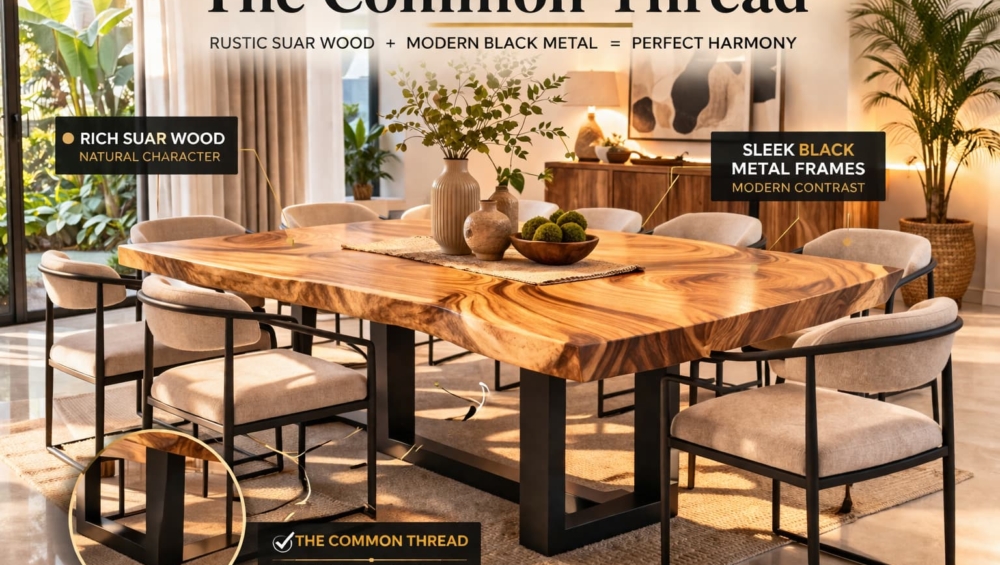
Many people buy pre-matched dining sets because they fear making a design mistake. Actually, buying a generic, matching set often makes your home look like a boring furniture catalog. Instead, top interior architects utilize “eclectic styling” to inject deep personality into a luxury space. However, mixing different eras and materials easily creates visual chaos if you lack a solid framework.
At Home Decor Indonesia, we treat interior design as a highly structured ecosystem. Therefore, we created this analytical guide to help you pair dining tables and chairs flawlessly.
Ready to engineer a cohesive aesthetic? Let’s decode the styling algorithm!
1. Find the “Common Thread” Protocol
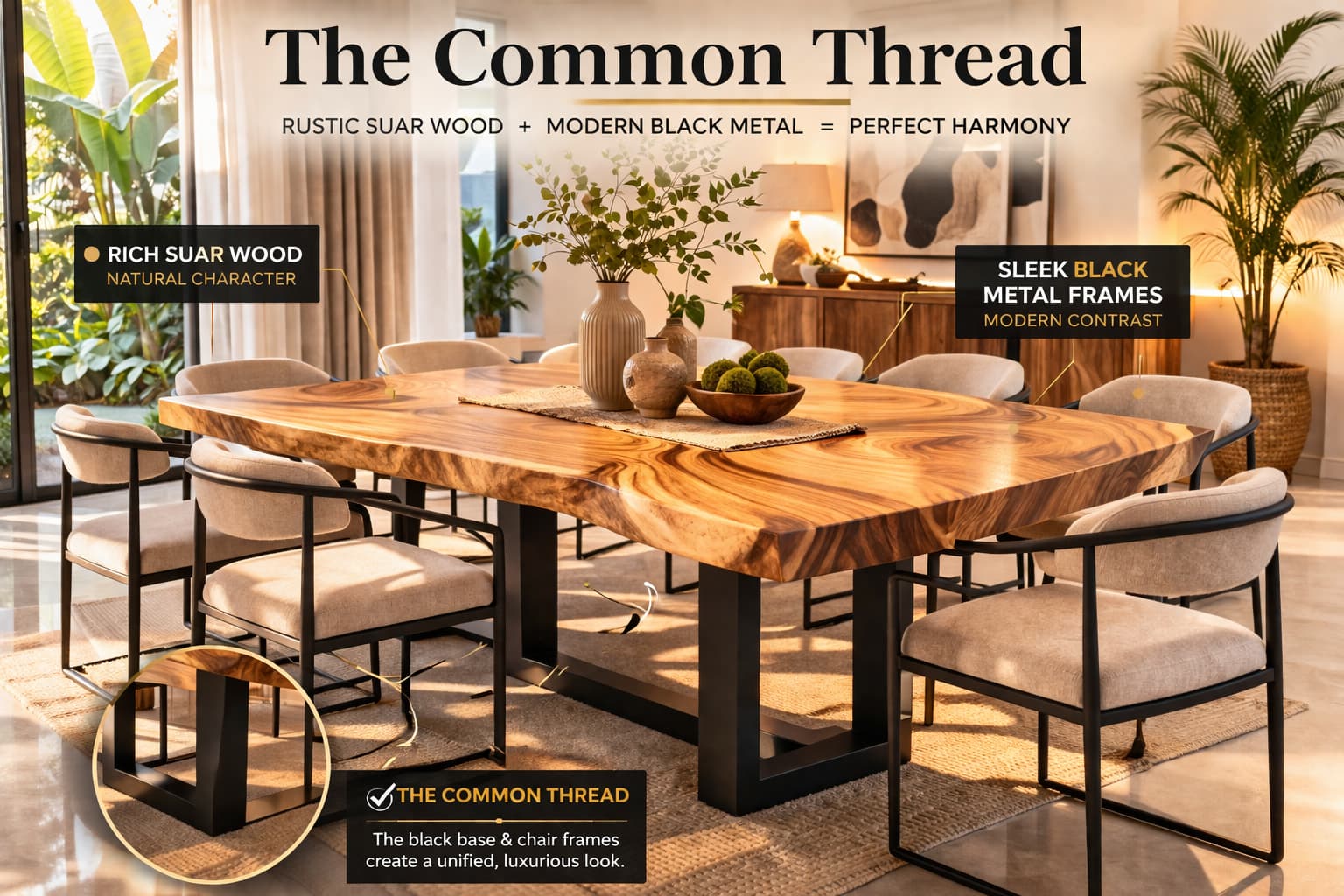
First, you must establish a strict visual baseline before you mix different design eras. Specifically, pairing a heavy vintage wood table with ultra-modern metal chairs works beautifully if you connect them intentionally. Because the human eye craves logic, you must share at least one “common thread” between the pieces.
For example, you can easily match the matte black metal legs of a contemporary chair to a black iron base on a vintage table. Alternatively, you can use the same fabric color to tie completely different chair shapes together. Ultimately, this shared material creates a structural bridge that prevents the room from looking like a random garage sale.
2. Control the Visual Weight
Next, you must balance the physical scale of your furniture. Usually, amateur designers pair massive, heavy wooden tables with tiny, delicate wire chairs. Consequently, the table completely swallows the chairs visually, ruining the room’s proportions.
Instead, you must strictly match the “visual weight” of the items. If you own a thick, commanding dining table, you must surround it with substantial, high-density upholstered chairs. Thus, maintaining this geometric proportion keeps the entire spatial dynamic in perfect harmony.
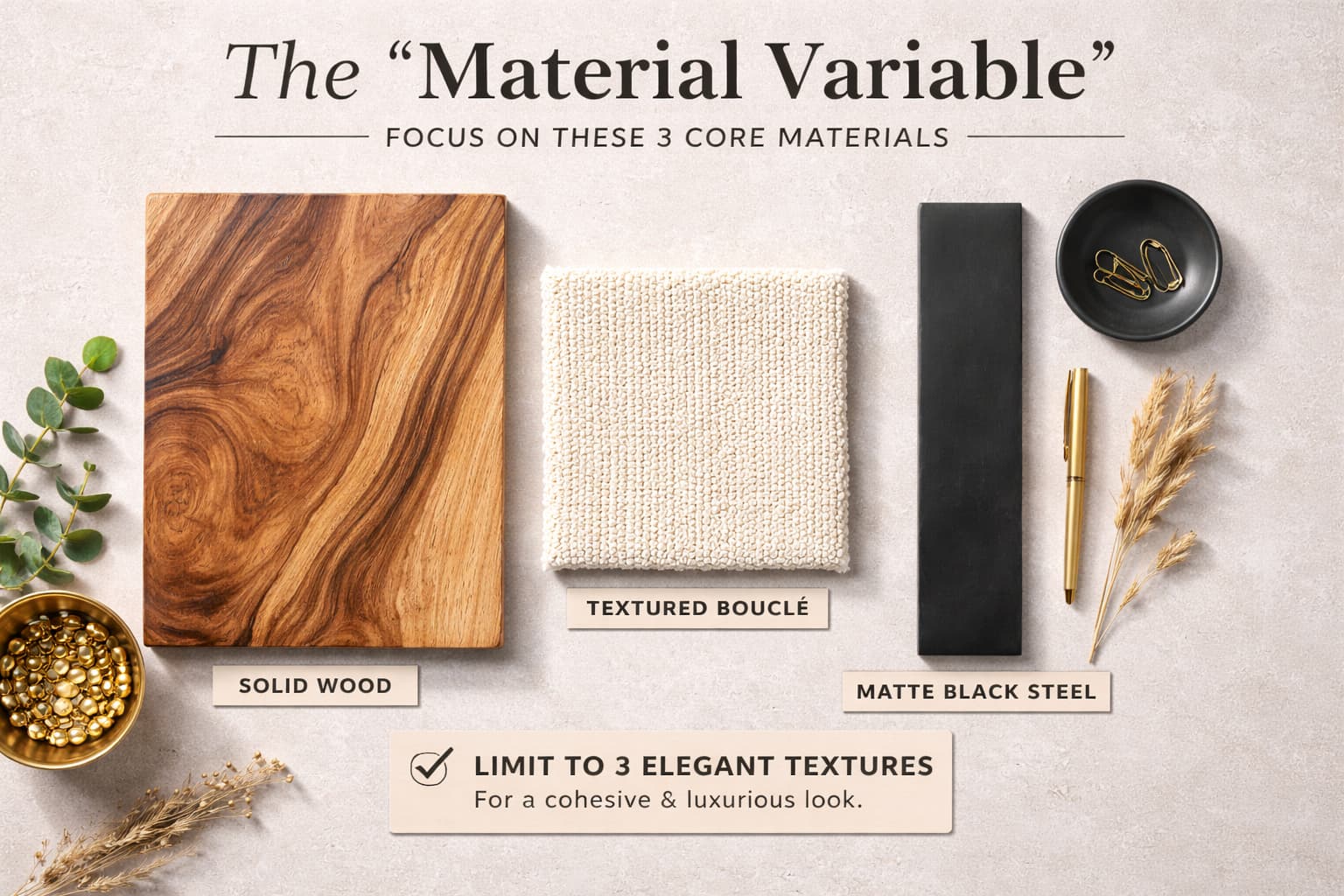
3. Limit Your Material Variables
Furthermore, you must control your material palette to avoid a cluttered, chaotic environment. Actually, a successful eclectic room relies on strict discipline, not random choices.
Therefore, you should limit your dining room to a maximum of three core materials—like warm teak wood, matte black steel, and textured bouclé fabric. By restricting your variables, you create a deliberate, high-end look rather than a messy, disorganized layout. Ultimately, less visual noise translates directly to a more luxurious aesthetic.
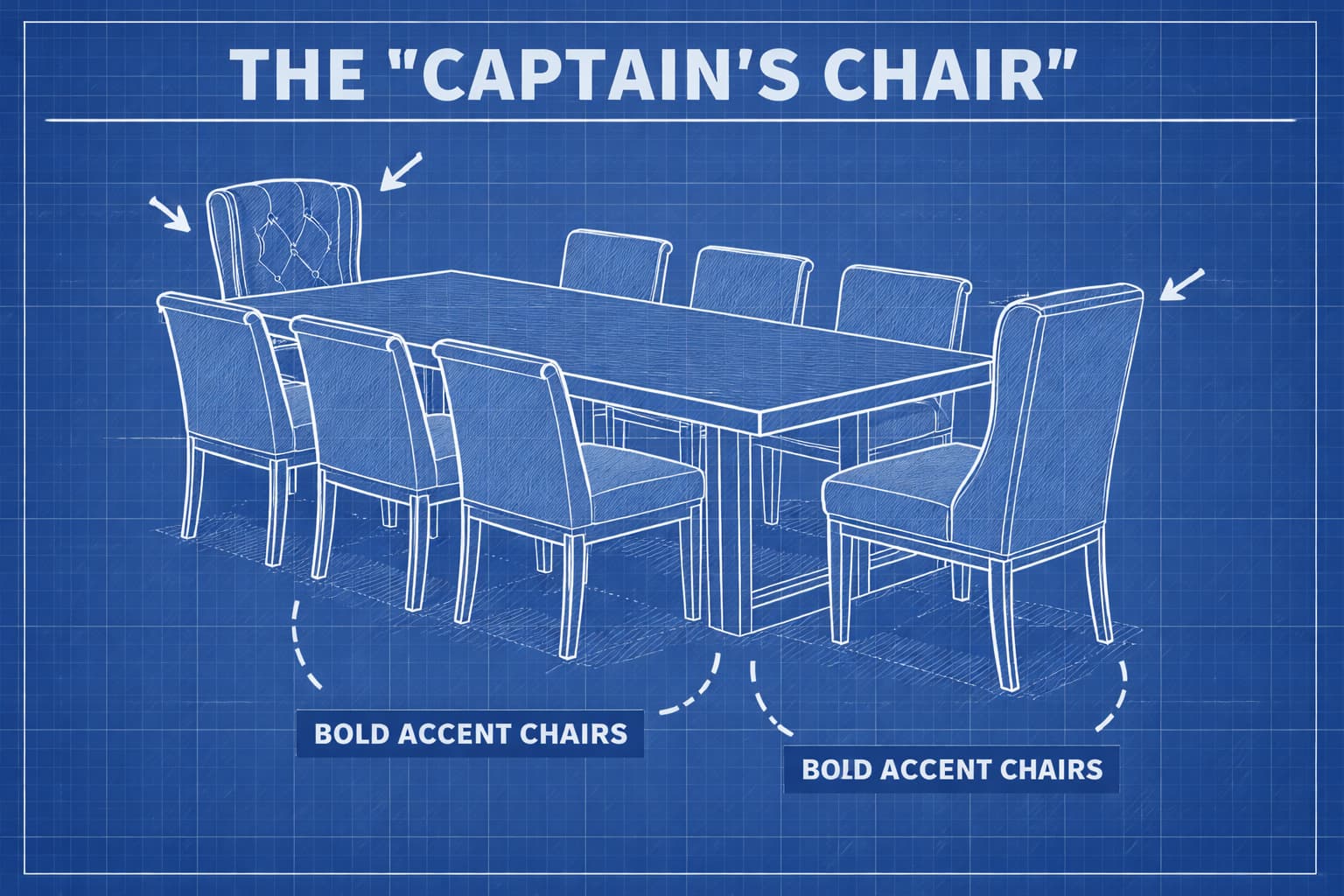
4. Anchor the Ends (The Captain’s Chair Strategy)
Moreover, you can introduce variety safely by using the “Captain’s Chair” method. Specifically, you place four matching, simple chairs along the long sides of your rectangular table. Then, you place two completely different, highly dramatic chairs at the exact opposite ends.
Because this strategy respects the table’s linear hierarchy, it adds incredible visual interest without breaking the room’s structural symmetry. Ultimately, you achieve a custom, designer aesthetic with zero risk of overwhelming the space.
5. Execute Your Style Statement
Finally, you must execute your design with absolute confidence. Actually, curating a bespoke dining ecosystem requires premium ingredients and logical planning. By mixing high-quality textures and analyzing your geometric ratios, you build a room that looks effortlessly curated over time.
If you want to skip the guesswork and see exactly how professional designers align these elements, you should Browse our curated dining table set styles. Ultimately, trusting the premium collections at Home Decor Indonesia guarantees your eclectic vision translates into an elegant reality!
Conclusion: Frame Your Dining Ecosystem
In conclusion, mastering style alignment requires logical discipline and a sharp eye. Ultimately, you must establish a common thread, manage your visual variables, and respect geometric proportions. By applying this systematic framework, you transform a generic dining room into a stunning, personalized masterpiece!