English
 Bahasa Indonesia

So, you found “The One.” It looks dreamy in the online catalog, and you can already imagine lazy Sundays spent lounging on it. However, a common tragedy often strikes in the world of interior design. You order the sofa, the delivery team unboxes it, and suddenly, your spacious living room feels like a claustrophobic storage unit.
We see this happen constantly. Most people buy based on emotion, not math. Consequently, they end up with furniture that chokes the room’s energy. In reality, achieving a designer-level look requires more than just good taste; it requires physics and geometry.
You must master the art of flow. Therefore, we created this guide to help you navigate the numbers. We will break down exactly how to measure, why the “18-inch rule” dictates your comfort, and how to balance visual weight like a pro.
Ready to engineer your perfect layout? Let’s grab that tape measure.
How to Calculate the Perfect Sofa Size for Your Living Room Layout
Conduct a Ruthless Spatial Analysis
Before you even look at a swatch, you must map your territory. Specifically, you need to measure the usable space, not just the wall-to-wall distance.
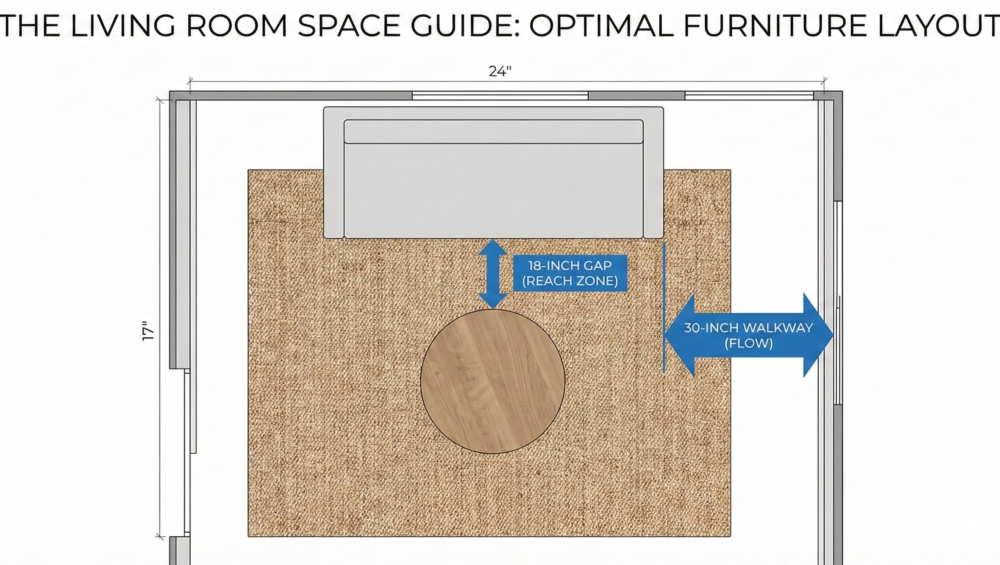
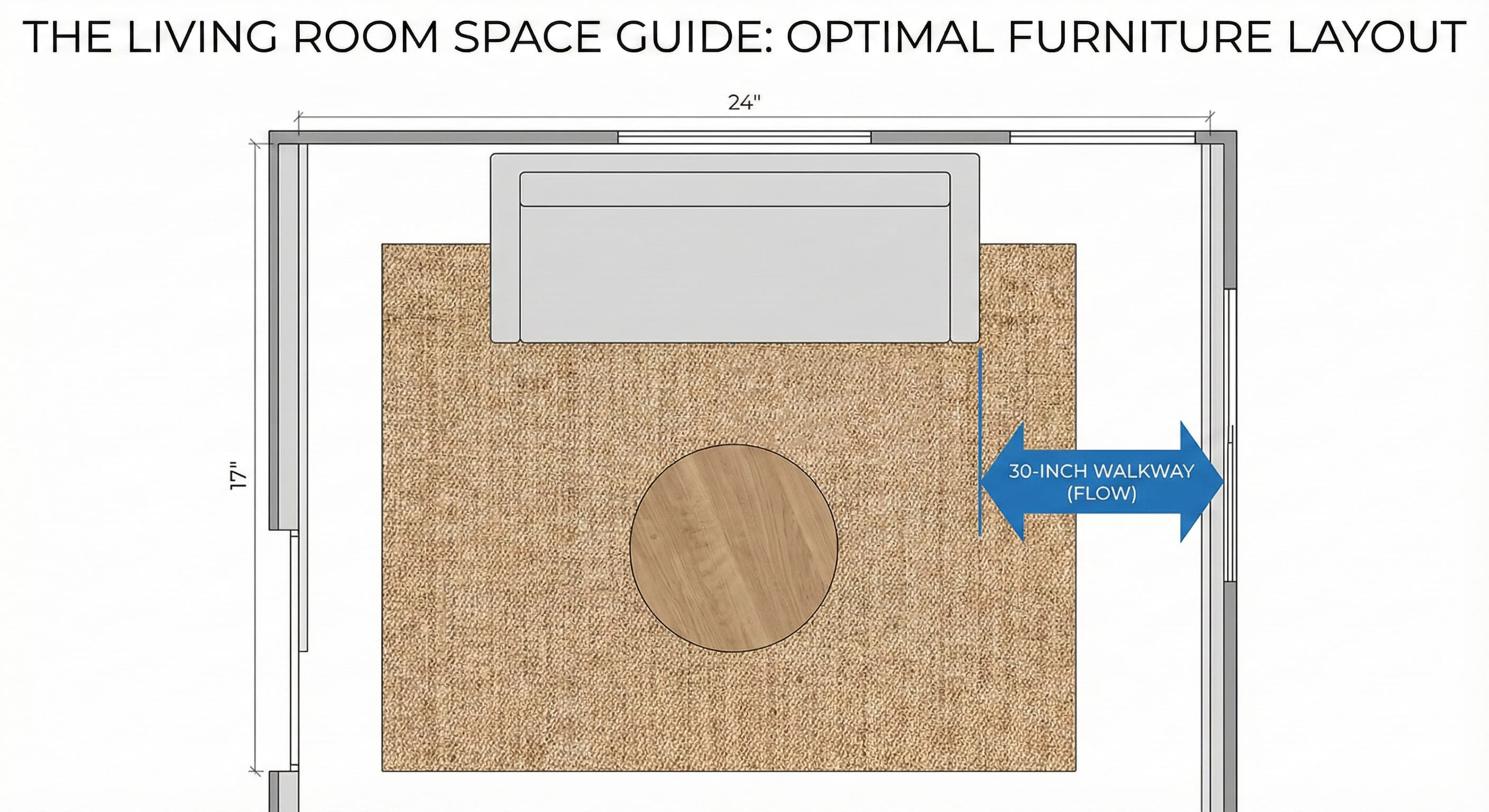
First, identify your “traffic lanes.” These are the invisible highways people use to walk through the room. Never block these paths with a sofa arm or a chaise. Ideally, you keep a path width of at least 30 to 36 inches for main walkways.
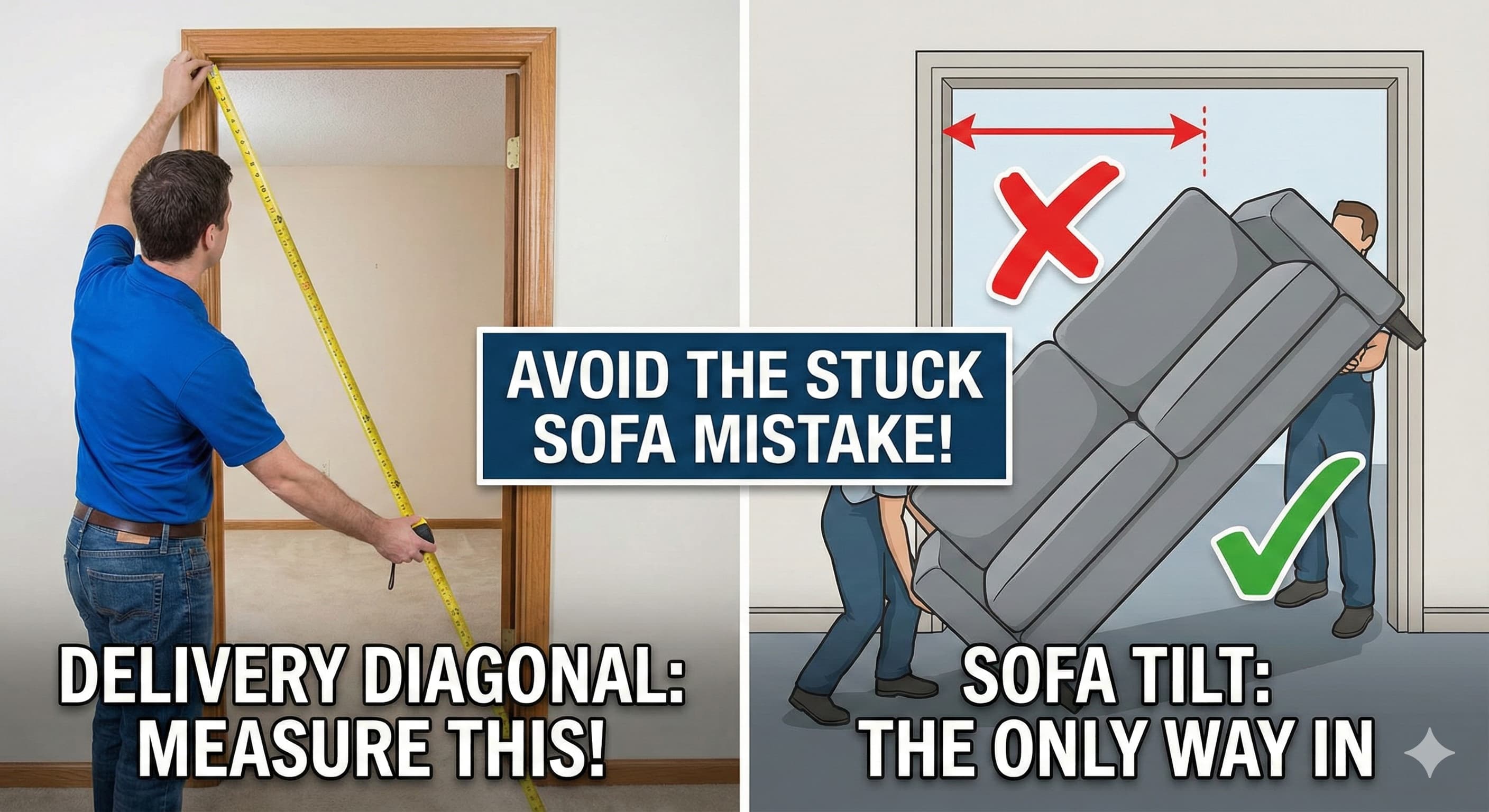
Next, consider the “delivery diagonal.” This is the step most people forget. You might have space in the room, but does the sofa fit through your front door? Measure the height and width of all entryways, hallways, and stairwells. If the sofa’s diagonal depth exceeds your door frame’s width, you have a major problem.
Ultimately, applying precise scaling prevents the nightmare of returning a custom piece of furniture because it physically won’t fit inside your house.
Respect the “18-Inch Clearance” Rule
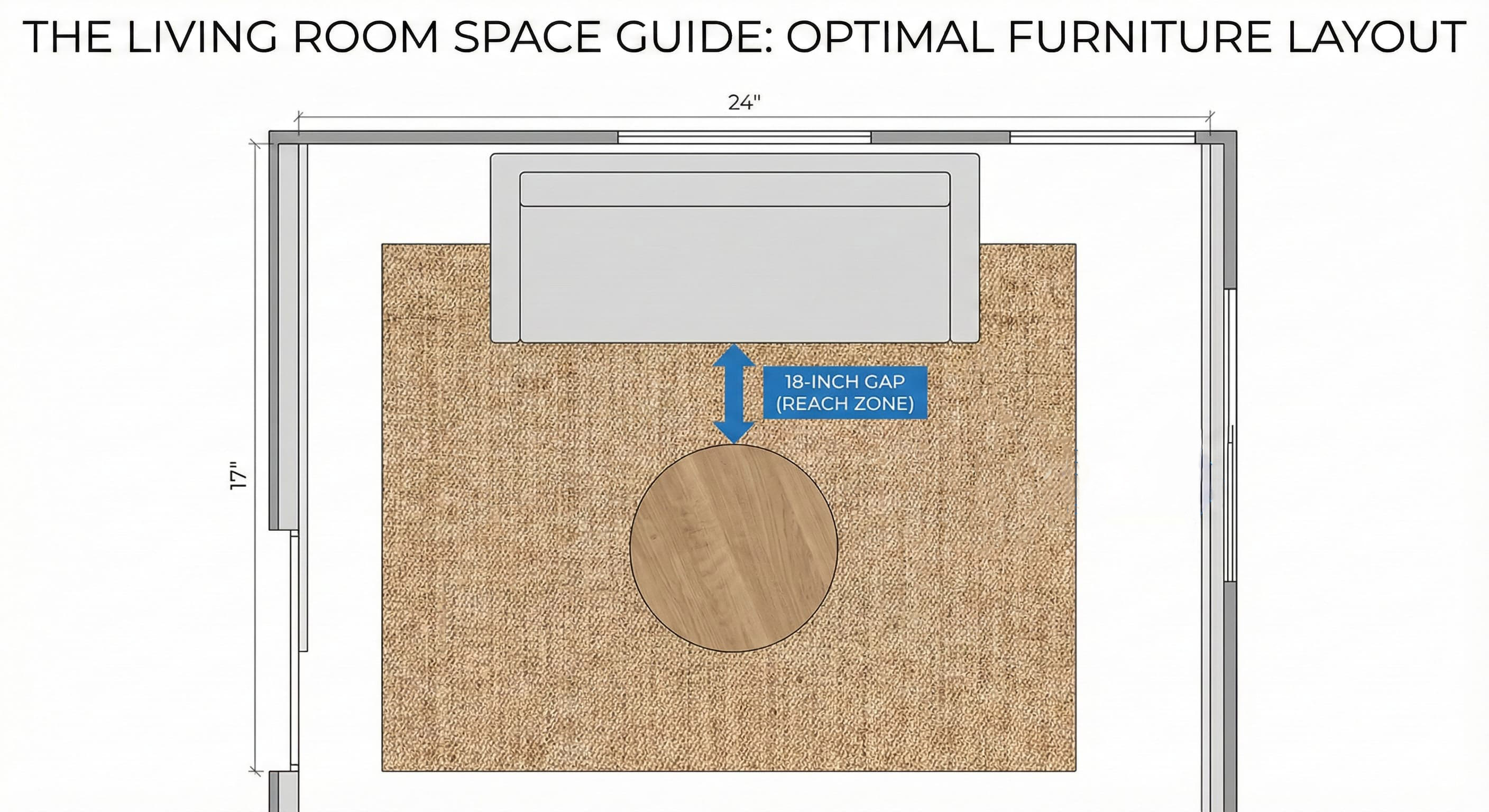
Now, let’s talk about ergonomics. A living room serves a function: conversation and relaxation. Thus, the relationship between your sofa and the coffee table defines the room’s utility.
Designers swear by the 18-inch rule.
-
The Sweet Spot: Place your coffee table exactly 18 inches from the edge of the sofa seat.
-
Why it works: This distance allows you to reach your drink without straining your back. Simultaneously, it provides enough legroom so you don’t bang your shins when you sit down or stand up.
Furthermore, this rule applies to side tables too. Keep them close enough to set down a book, but far enough to avoid a cluttered look. Essentially, these measurements create a rhythm that allows people to move and interact effortlessly.
Balancing Visual Weight vs. Actual Size
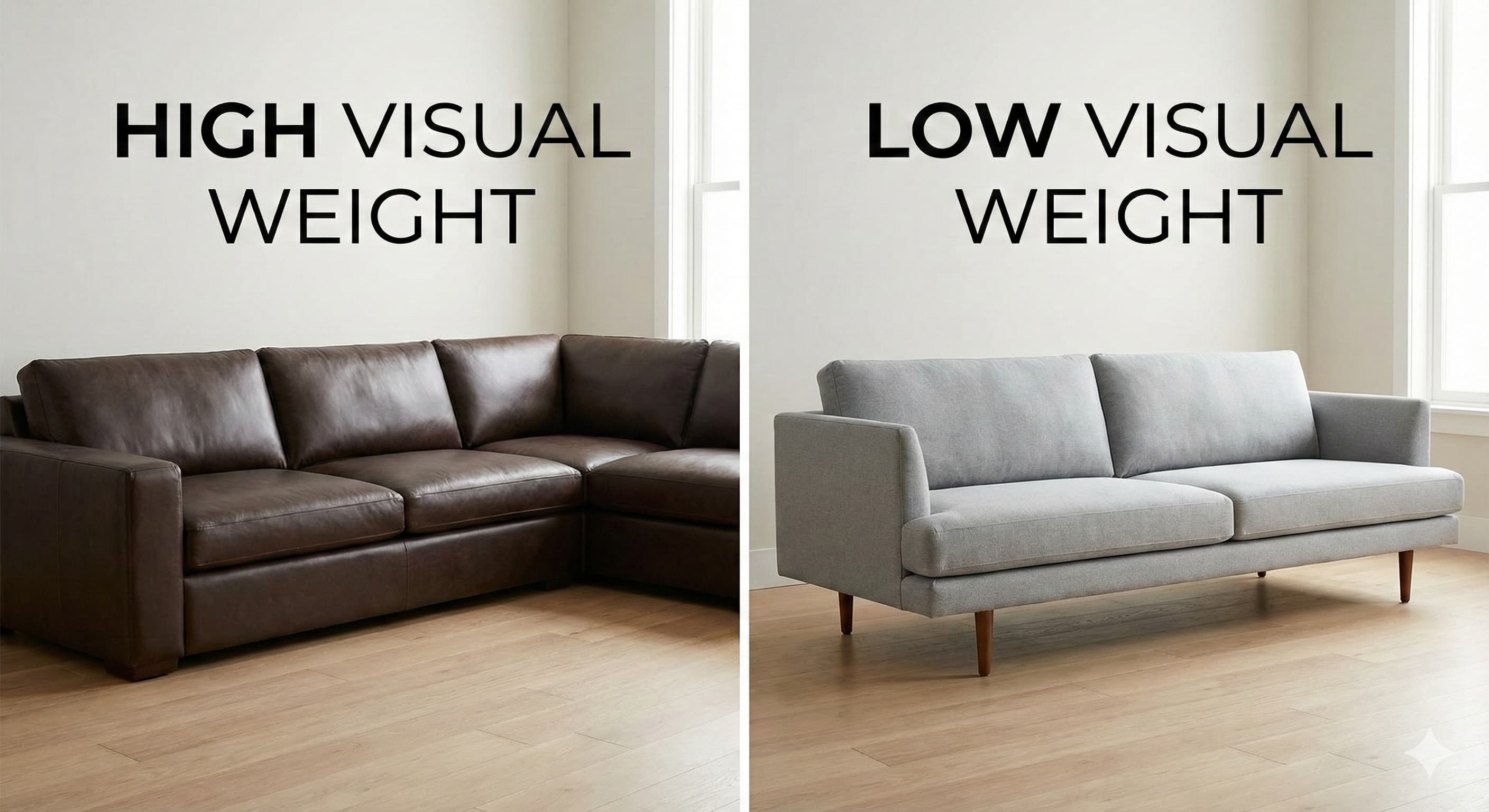
Here is where true design expertise comes into play. A sofa has physical dimensions (tape measure size) and visual weight (how big it looks).
For example, a dark, blocky leather sofa that sits directly on the floor carries immense visual weight. It commands attention and “fills” the room visually. In contrast, a light beige sofa of the exact same size, but raised on slender legs, allows light to pass underneath. Consequently, it appears smaller and airier.
Therefore, use this to your advantage:
-
If you have a small room, choose a sofa with exposed legs and low arms. It tricks the eye into seeing more space.
-
On the other hand, if you have a grand room with high ceilings, anchor it with a skirted or solid-base sofa to provide grounding.
Moreover, consider the silhouette. A sleek, modern profile takes up less visual bandwidth than a puffy, overstuffed traditional style. You must balance the sofa’s weight against the other elements in the room to achieve harmony.
Conclusion: Trust the Numbers
Decorating involves art, but layout involves science. By following these technical steps, you remove the guesswork. You stop hoping it fits and start knowing it fits.
Ultimately, a well-calculated layout creates a home that feels welcoming, spacious, and perfectly curated. Measure twice, buy once, and enjoy the flow.