English
 Bahasa Indonesia

We often treat armchairs like sculptures. We admire their silhouette, we obsess over the velvet texture, and we visualize them in our living room corner. However, we frequently forget their primary job: holding our bodies.
Buying a chair based solely on looks creates a recipe for regret. Inevitably, that stunning accent chair becomes a “clothes rack” because it hurts your back after ten minutes. True luxury implies more than just expensive fabric; it implies a mastery of human biology.
Designers call this the “Art of Seating.” Basically, it combines physics with comfort. To choose a chair that feels as good as it looks, you must understand the mechanics beneath the upholstery. Therefore, we will break down the three critical factors of chair ergonomics: the rake, the depth, and the lumbar support.
Ready to find your perfect fit? Let’s analyze the anatomy of comfort.
Understanding Ergonomics in Luxury Armchairs
1. The Angle of Repose: Decoding “Backrest Rake”
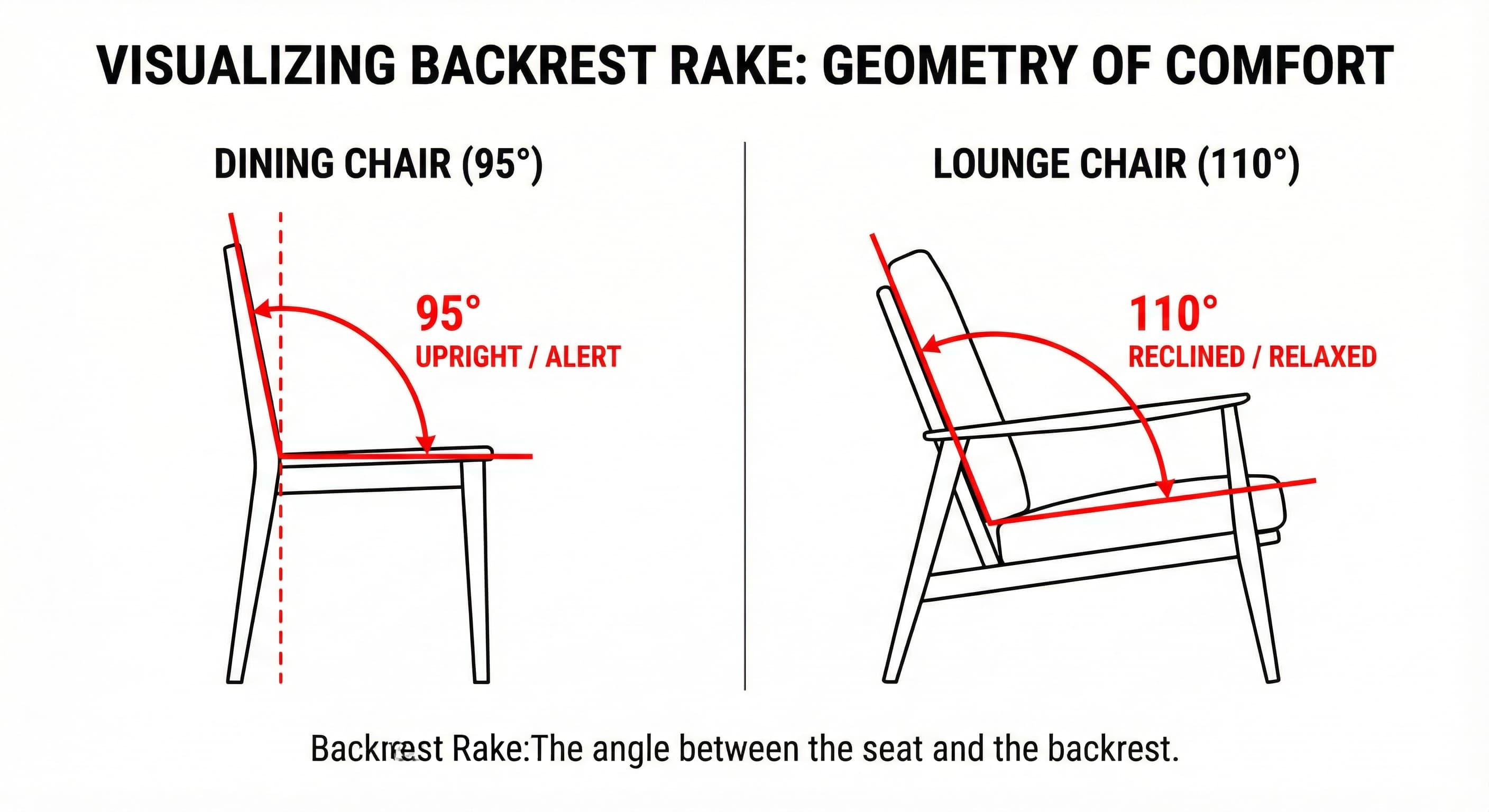
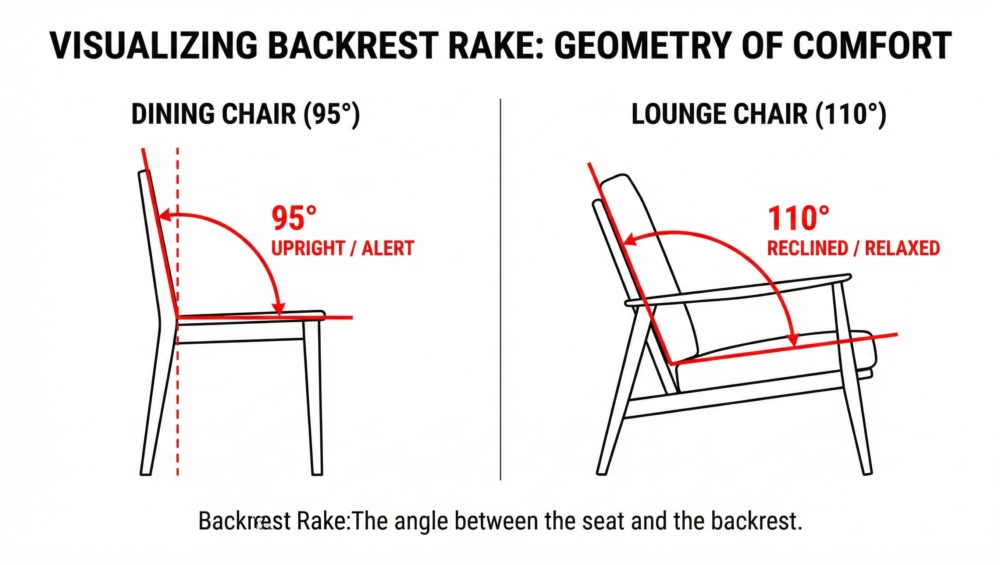
First, let’s talk about angles. In the industry, we call the angle of the backrest the “rake.” Essentially, this determines whether you sit at attention or slouch in relaxation.
A formal dining chair typically features a steep rake (near 90 degrees). Why? Because you need to lean forward to eat and converse. In contrast, a lounge chair demands a generous, reclined rake. This backward tilt transfers the weight of your upper body away from your hips and onto the backrest.
However, finding the balance proves tricky. If the rake leans too far back without a headrest, your neck muscles strain to keep your head forward. Conversely, if it stands too upright, gravity compresses your spine. Thus, smart designers engineer the ergonomic geometry to match the chair’s specific purpose.
2. The Goldilocks Zone: Getting Seat Depth Right
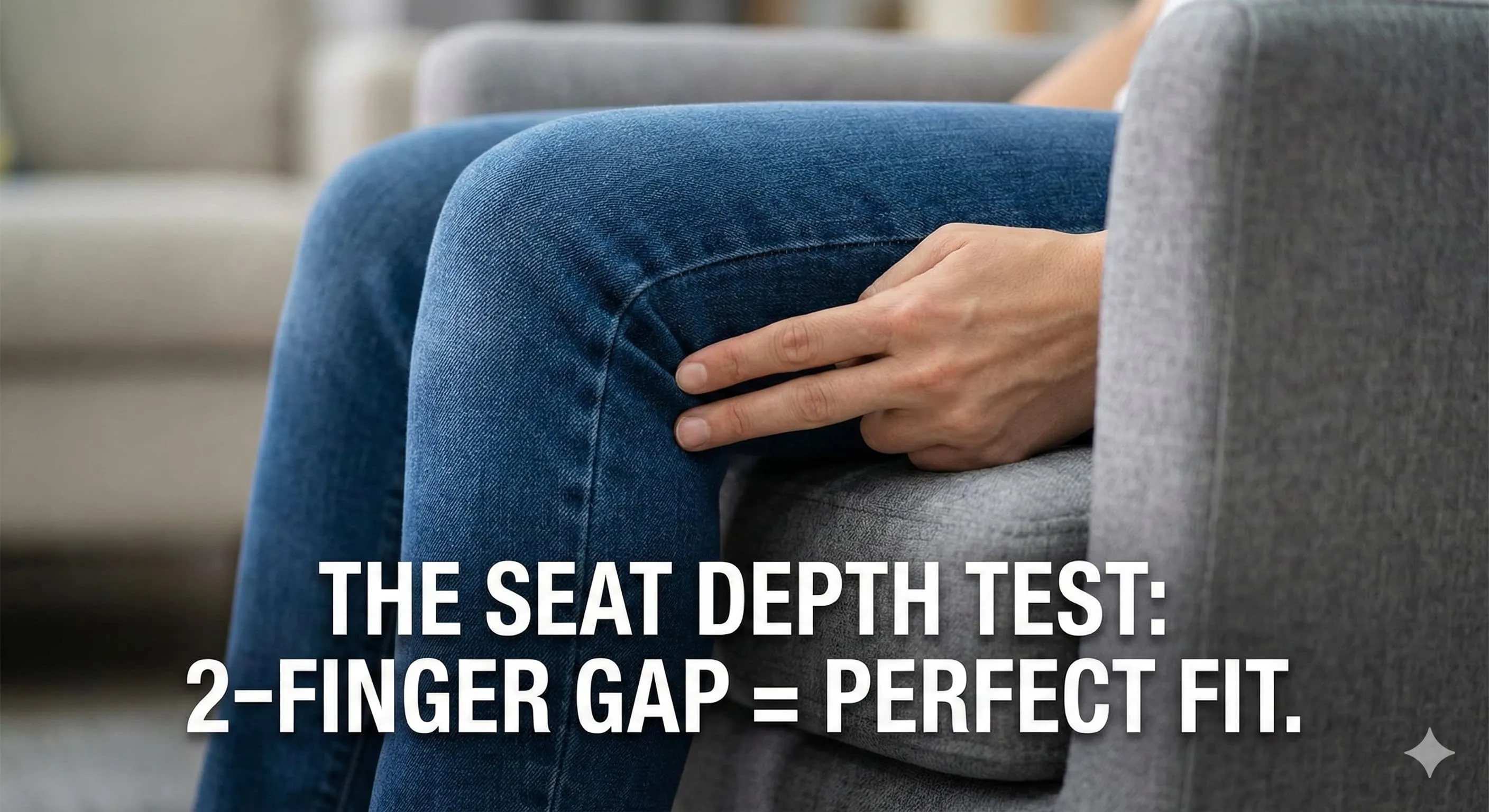
Next, we move to the most common ergonomic failure: seat depth. This measures the distance from the front edge of the seat to the backrest cushion.
-
Too Deep: If the seat extends too far, your knees hit the cushion before your back touches the support. Consequently, you slide forward into a slouch, destroying your posture.
-
Too Shallow: If the seat ends too soon, half of your thigh hangs off the edge. As a result, you lose support, and your legs feel heavy and restless.
Ideally, you want a gap of about two to three fingers between the back of your knee and the seat edge. This clearance ensures your feet rest flat on the floor while your lower back remains supported. Ultimately, measuring this ensures your individual comfort takes priority over generic sizing.
3. The Spinal Savior: Proper Lumbar Support
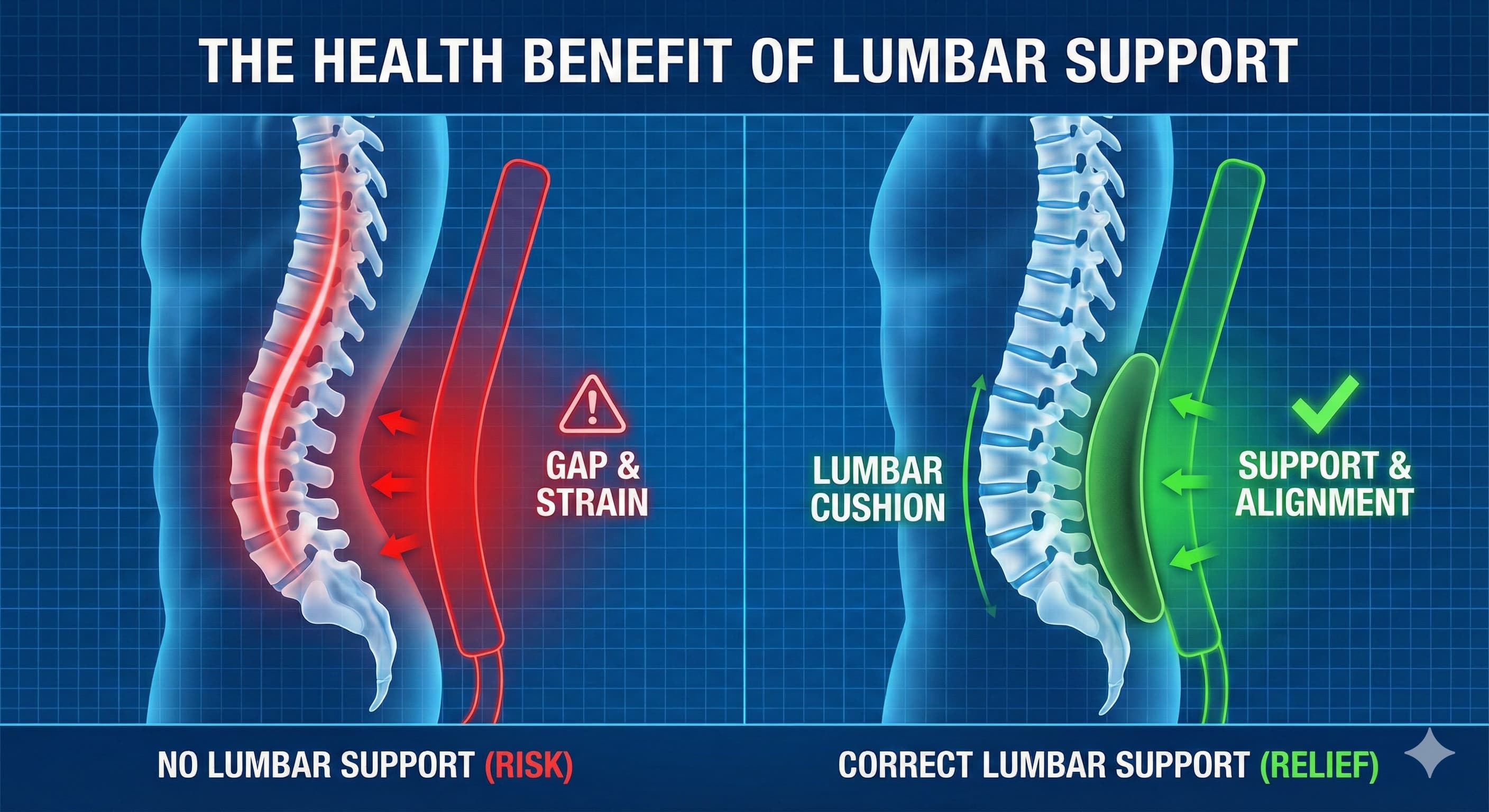
The human spine curves naturally; it does not form a straight line. Unfortunately, many cheap chairs feature flat, rigid backs. When you sit in them, gravity flattens your natural curve against the chair.
Over time, this pressure creates significant lumbar strain.
A luxury armchair combats this. Manufacturers contour the frame or cushion to fill that gap in your lower back. Furthermore, some designs include a separate lumbar pillow. This seemingly small detail acts as a wedge, preserving the natural “S” curve of your spine. Therefore, you can sit for hours reading a novel without feeling that familiar ache when you finally stand up.
4. Form Follows Function: Reading Chair vs. Lounge Chair
Finally, you must define the activity. Not all sitting requires the same posture.
-
The Conversation Chair: This piece sits in your formal living room. Here, you engage with guests. Accordingly, these chairs feature firmer foam and a more upright rake to keep you alert and engaged.
-
The Reading Chair: This is your sanctuary. Unlike a conversation chair, a reading chair needs slightly softer cushioning and angled armrests. Specifically, the armrests must support your elbows to hold a book up, preventing shoulder fatigue.
Ultimately, knowing how you plan to use the chair dictates which ergonomic features you need most.
Conclusion: Sit Before You Commit
Specifications tell part of the story, but your body tells the rest. Now that you understand the mechanics of the rake, depth, and lumbar support, you can shop with a critical eye.
Don’t just look at the chair. Analyze it. Sit in it. Then, ask yourself if it supports you or just merely holds you. True luxury supports you in every sense of the word.