 4.9



Choosing the right window treatment can feel overwhelming, especially when you’re torn between blackout and dimout options. Both styles promise light control, but they differ in how much darkness they provide, how they affect privacy, energy use, and overall room aesthetics. This practical guide walks you through the key differences and helps you decide which curtain type best suits bedrooms, living rooms, and even home offices, while highlighting a few top picks from Home Decor Indonesia.
Understanding Light Control: Blackout vs Dimout Basics
Blackout curtains are engineered to block 100 % of visible light and a large portion of UV rays. They typically feature a dense, opaque backing—often a polyester or acrylic coating—that prevents sunlight from penetrating the fabric. Dimout curtains, on the other hand, reduce glare and soften daylight without creating total darkness. They usually have a lighter weave or a semi‑transparent backing that filters light, offering a pleasant “room‑darkening” effect rather than complete blackout.
From a functional perspective, blackout curtains excel in sleep‑critical spaces, media rooms, or any area where you need total privacy. Dimout curtains shine in spaces where natural light is desirable but you still want to limit glare, such as living rooms or home offices. Understanding these core differences sets the stage for room‑by‑room recommendations.
Best Choice for Bedrooms: Sleep Quality and Privacy
When it comes to bedrooms, the primary goals are uninterrupted sleep, privacy from street views, and energy efficiency. Total darkness signals the body to produce melatonin, the hormone that regulates sleep cycles. Blackout curtains deliver this environment reliably, making them the top choice for most sleepers.

Home Decor Indonesia offers several high‑performance blackout options that fit bedroom dimensions and décor styles. The Grey Blackout Roller Blind – Modern Roller Shade provides a sleek, contemporary look while guaranteeing 100 % light blockage. Its 68 × 225 cm size works well for standard windows and can be paired with a simple valance for a clean finish.

If you prefer a softer palette, the Cream Blackout Roller Blind (80 × 230 cm) – Minimalist Roller Shade adds warmth to the room while still delivering total darkness. For those who favor fabric curtains, the Neo Denver – 39 Lavender – Blackout Curtain and Neo Denver – 36 Ruby – Blackout Curtain combine vibrant colors with 100 % light blocking, allowing you to match your bedding or accent colors effortlessly.
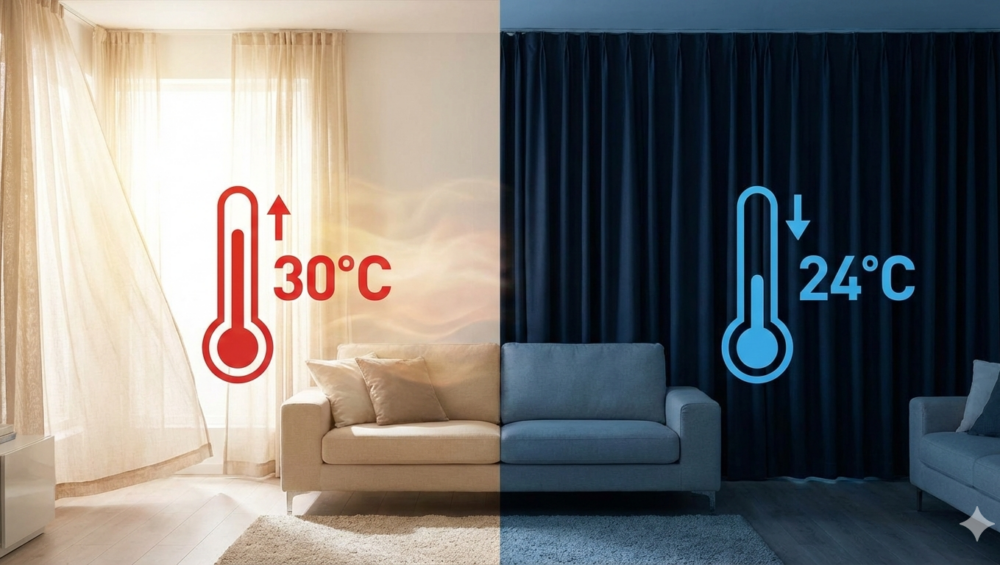
Beyond sleep, blackout curtains also help insulate the room, reducing heat loss in winter and heat gain in summer—an added energy‑saving benefit for bedroom comfort.
Living Room Considerations: Ambiance, Energy Efficiency, and Style
Living rooms often serve multiple functions: a space for relaxation, entertainment, and social gatherings. Here, the balance between light control and ambience is crucial. Dimout curtains can soften harsh sunlight, reduce glare on TVs, and still let a gentle glow fill the room, preserving a welcoming atmosphere.
If you enjoy movie nights or need occasional full darkness for a home theater setup, blackout curtains become valuable. However, you can achieve flexibility by layering a dimout sheer panel beneath a blackout curtain, allowing you to pull the blackout shade aside when you want natural light.
Stylistically, blackout fabrics tend to be heavier and may dominate a room if not paired thoughtfully. Choose neutral tones like the Grey Blackout Roller Blind for a minimalist vibe, or opt for the richer hues of the Ruby Blackout Curtain to create a dramatic focal point. Pair these with lighter decorative tie‑backs, wooden rods, or brushed metal hardware to keep the space feeling airy.
From an energy perspective, blackout curtains can lower cooling costs by reflecting up to 80 % of solar heat, a notable advantage for Indonesia’s sunny climate. Dimout options provide modest insulation but excel at preserving daylight, which can reduce the need for artificial lighting during the day.
How to Pair Your Curtain Choice with Window Treatments and Décor
Integrating curtains with other window treatments enhances both function and style. For bedrooms, consider a double‑track system: install a blackout roller blind for night‑time privacy, then add a lightweight sheer curtain for daytime elegance. This combo lets you enjoy a soft, filtered glow without sacrificing the ability to achieve total darkness when needed.
In living rooms, a common approach is to mount a curtain rod above the window frame and use a ceiling‑mounted roller blind underneath. This layering allows quick transitions between dimout, blackout, and open‑window states. Choose hardware that complements your interior—brushed nickel for a modern look, or matte black for an industrial feel.
When selecting colors, think about the room’s overall palette. Neutral blackout fabrics blend seamlessly with most décor, while bold colors like Lavender or Ruby can serve as accent pieces. Coordinate tie‑backs, cushions, or rugs with the curtain hue to create a cohesive design narrative.
Finally, remember to measure accurately. For roller blinds, add a few centimeters to the width to ensure full coverage, and for curtains, allow at least 2‑3 × the window width for a full, gathered look. Proper installation not only improves aesthetics but also maximizes light‑blocking performance.
Frequently Asked Questions
Can I use dimout curtains in a bedroom?
Yes, dimout curtains can be used in bedrooms if you prefer some natural light in the morning or want a softer ambience. However, they won’t provide the complete darkness needed for optimal sleep, so pairing them with a blackout blind or using a layered approach is recommended.
Do blackout curtains help reduce energy bills?
Blackout curtains act as an extra barrier against heat loss in winter and heat gain in summer, which can lower heating and cooling costs. The effect is most noticeable in rooms with large windows or direct sun exposure.
How do I clean and maintain blackout or dimout curtains?
Most blackout fabrics are machine‑washable on a gentle cycle, but always check the care label. Dimout curtains, being lighter, may require hand‑washing or spot‑cleaning to preserve their texture. Regular vacuuming with a brush attachment helps remove dust and keep the fabric looking fresh.
By weighing light control, privacy, energy savings, and style, you can confidently choose between blackout and dimout curtains for each room. For quality options that combine function with design, explore the selections at Home Decor Indonesia.